A friend of mine — a small business owner who imports raw materials — called me last month in a mild panic. ‘Everything I read says something different,’ she said. ‘Some analysts are screaming buy gold, others say oil is about to crash. What do I actually do?’ I get it. The commodity market in 2026 feels like trying to read a weather forecast written in five different languages simultaneously. So let’s slow down, think this through together, and actually make sense of where crude oil and gold are headed — and more importantly, what that means for you.
The Crude Oil Landscape in 2026: A Market Caught Between Two Forces
Crude oil in 2026 is essentially a tug-of-war between two powerful, opposing forces. On one side, you have the green energy transition gradually compressing long-term demand forecasts — the IEA’s most recent update suggests global oil demand growth has slowed to roughly 0.8 million barrels per day, compared to the 2+ million bpd growth we saw in post-pandemic rebounds. On the other side, OPEC+ has been remarkably disciplined, extending voluntary production cuts into mid-2026, keeping Brent crude hovering in the $78–$88 per barrel range as of Q1 2026.
Here’s what makes this genuinely interesting: geopolitical tensions in the Middle East haven’t dissipated — if anything, the ongoing instability in key shipping corridors (think Strait of Hormuz risk premiums) is keeping a floor under prices that pure supply-demand math wouldn’t justify on its own. So even though electric vehicle adoption is accelerating — global EV sales hit approximately 22 million units in 2025 — oil demand from aviation, petrochemicals, and emerging market transportation is still very real.
Logically, what does this mean for prices? A sharp spike above $100 seems unlikely unless a major supply shock occurs. But a dramatic crash to $60 or below is equally constrained by OPEC+’s willingness to cut. Think of it as a managed range market — volatility within a corridor rather than directional momentum.
Gold in 2026: The Quiet Performer That Keeps Surprising Everyone
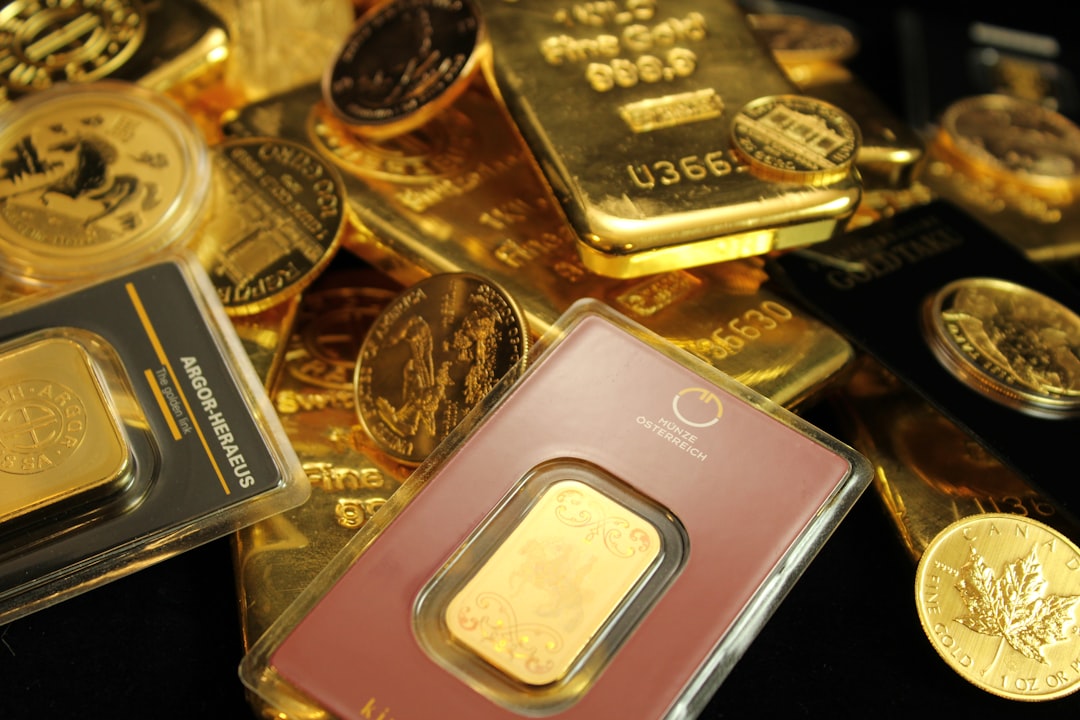
Gold, on the other hand, has had a remarkably strong run coming into 2026. After breaking the historic $2,500/oz ceiling in late 2024 and consolidating through 2025, gold is now trading in the $2,700–$2,900/oz range in early 2026. That’s not a bubble — there are structural reasons behind this.
Central banks, particularly from China, India, Poland, and several Gulf states, have been on a sustained gold-buying spree since 2022 as part of a broader de-dollarization strategy. This isn’t conspiracy theory territory — the World Gold Council’s 2025 annual report confirmed that central bank purchases exceeded 1,000 metric tons for the third consecutive year. When sovereigns are buying at scale, that fundamentally changes the demand equation.
Additionally, real interest rates — the true enemy of gold — have started to ease. As the U.S. Federal Reserve navigated a careful rate-cutting cycle through late 2025 into 2026, the opportunity cost of holding gold declined. Inflation expectations, while moderated, haven’t fully vanished either, keeping gold’s safe-haven appeal intact.
Real-World Examples: How Different Players Are Responding
Let’s ground this in actual behavior, because data without context is just noise.
- South Korean manufacturers (domestic example): Several mid-sized Korean companies that rely on petrochemical inputs have been locking in 6-month forward contracts on oil rather than riding spot prices — a smart hedge given the range-bound volatility we described. It’s not glamorous, but it’s rational risk management.
- Japanese institutional investors: The Government Pension Investment Fund (GPIF) of Japan, one of the world’s largest pension funds, increased its allocation to real assets including gold-linked instruments in its 2025-2026 portfolio rebalancing — signaling that even the most conservative institutions see gold as a legitimate portfolio stabilizer.
- U.S. retail investors: Gold ETF inflows have rebounded strongly in early 2026 after a relatively quiet 2023-2024 period. SPDR Gold Shares (GLD) saw its highest quarterly inflows since 2020 in Q4 2025, suggesting renewed retail appetite for the metal.
- Energy companies: Major oil companies like Shell and TotalEnergies are dual-tracking — maintaining core oil production while aggressively investing in LNG and green hydrogen, essentially hedging their own business model against long-term demand uncertainty.
What Should You Actually Do? Realistic Alternatives for Different Situations
This is where I want to be genuinely useful rather than just academically interesting. Your situation matters enormously here.
- If you’re a small business owner with commodity exposure (like my friend): Don’t try to speculate on oil direction. Instead, explore forward contracts or fixed-price supplier agreements for a 3-6 month window. The cost of certainty is worth more than the potential upside of getting lucky on spot prices.
- If you’re an individual investor building a portfolio: A modest 5-10% allocation to gold (through ETFs like GLD or IAU, or physical gold if you prefer tangibility) functions as a portfolio stabilizer — not a get-rich scheme. Think of it as insurance with a historical track record of appreciating during crises.
- If you’re curious about energy stocks: Rather than betting on crude prices directly, consider integrated energy companies that have meaningful renewable transition strategies. They’re less purely correlated with oil price swings and carry better long-term positioning.
- If you have no commodity exposure and just want to understand macro trends: Watching the oil-gold ratio (how many barrels of oil one ounce of gold buys) is actually a fascinating macro indicator. When it’s high (gold expensive relative to oil), it often signals market stress or disinflationary pressure. Currently sitting around 32-35x, it’s worth monitoring.
The broader takeaway for 2026 is that commodity markets aren’t in a trending bull or bear phase — they’re in a complexity phase. Energy transition pressures, geopolitical risk premiums, central bank behavior, and currency dynamics are all intersecting simultaneously. Anyone who gives you a perfectly confident, one-directional forecast deserves your skepticism.
What markets like this reward is scenario thinking over prediction: What happens to my plan if oil hits $95? What if gold pulls back to $2,400? Building flexibility into your decisions — whether in business, investing, or planning — is far more valuable than betting on a single outcome.
Editor’s Comment : Commodity markets in 2026 are genuinely fascinating precisely because they’re at a historical inflection point — the old energy economy and the new one are wrestling in real time, and gold is quietly serving as the world’s financial anxiety barometer. My honest take? Don’t get paralyzed by the noise or seduced by confident predictions. The smartest move right now is building resilient strategies that work across a range of outcomes rather than optimizing for one scenario. Stay curious, stay flexible, and always ask: what’s my plan if I’m wrong?
태그: [‘2026 commodity prices’, ‘crude oil outlook 2026’, ‘gold price forecast 2026’, ‘OPEC oil market’, ‘gold investment strategy’, ‘raw material price trends’, ‘commodity market analysis’]
Leave a Reply