Picture this: it’s early 2026, and a small bakery owner in Seoul notices that the price of wheat flour has jumped nearly 28% compared to just eighteen months ago. She’s not alone. From construction contractors in Texas struggling with soaring steel costs to electronics manufacturers in Vietnam watching copper prices climb to record highs — the 2026 raw material price surge is quietly rewriting the rules of the global economy. Let’s think through this together, because understanding why it’s happening is just as important as knowing what to do about it.

What’s Actually Driving Raw Material Prices Higher in 2026?
This isn’t a single-cause story. The 2026 commodity price surge is the product of several overlapping pressures that have been building since the early 2020s and are now converging with full force.
- Energy transition demand: The global push toward EVs, solar panels, and wind turbines has dramatically increased demand for lithium, cobalt, nickel, and copper. The International Energy Agency (IEA) estimates that copper demand alone could rise by 40% by 2030, and markets are already pricing that in — with copper trading above $11,500 per metric ton as of Q1 2026.
- Geopolitical supply disruptions: Ongoing tensions in key mining regions — including parts of Sub-Saharan Africa and South America — have constrained supply chains for critical minerals. Trade policy friction between major economies has further complicated import-export flows.
- Climate-related agricultural shocks: Extreme weather events in 2025 damaged harvests across Southeast Asia, South Asia, and parts of the U.S. Midwest. Rice, wheat, and soybean prices have all responded sharply upward.
- Dollar strength and currency pressure: A relatively strong U.S. dollar in early 2026 has made commodity imports more expensive for emerging market economies, amplifying inflationary pressure locally even when global prices stabilize temporarily.
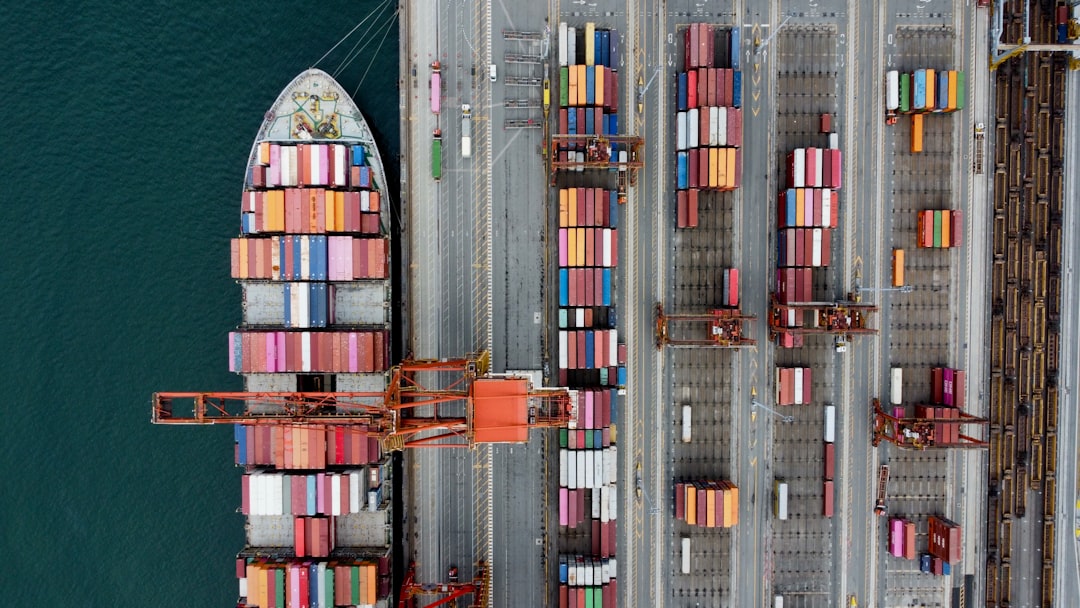
- Logistics bottlenecks: Red Sea shipping disruptions that began in 2024 have proven stubbornly persistent, keeping freight costs elevated and delaying raw material delivery timelines.
The Macroeconomic Ripple Effects: More Than Just Higher Prices
Here’s where it gets really interesting — and a little sobering. Raw material price increases don’t stay neatly contained in commodity markets. They cascade through virtually every layer of the economy through what economists call cost-push inflation.
When steel prices rise, construction costs follow. When construction costs rise, housing becomes less affordable. When housing affordability falls, consumer spending on discretionary goods drops. That chain reaction is exactly what central banks in the U.S., EU, and South Korea are watching nervously right now. The U.S. Federal Reserve, which had been cautiously easing rates through late 2025, has signaled a “pause and reassess” stance for 2026 — largely because commodity-driven inflation threatens to undo the progress made in previous years.
For businesses, the math is brutal: either absorb the cost (crushing margins) or pass it to consumers (risking demand destruction). Most mid-sized companies are caught somewhere uncomfortably in between.
Real-World Examples: From Seoul to São Paulo
Let’s ground this in reality with some concrete examples from 2026.
South Korea — The Tech Manufacturing Squeeze: South Korea, one of the world’s leading semiconductor and EV battery producers, is feeling the pinch acutely. POSCO, the country’s largest steelmaker, reported a 19% increase in iron ore procurement costs in its Q4 2025 earnings report, with further pressure expected in 2026. Downstream, mid-tier electronics manufacturers are struggling to maintain the price competitiveness that made them attractive to global buyers in the first place. The Korean government has responded with targeted raw material stockpiling programs and fast-tracking free trade agreement updates with resource-rich nations.
United States — Construction and Housing: In the U.S., the National Association of Home Builders reported in February 2026 that material costs now account for nearly 62% of new home construction expenses — a historic high. Lumber, copper wiring, and aluminum framing have all seen double-digit year-over-year price increases. This directly constrains housing supply at a time when inventory is already critically low in major metro areas.
Brazil — The Commodity Producer Paradox: Interestingly, Brazil — a major exporter of iron ore, soybeans, and oil — is experiencing something of a two-speed economy. Export revenues are booming, but domestic consumers are still facing food price inflation because global commodity prices pull local agricultural products toward export markets, reducing domestic supply. It’s a paradox that commodity-exporting nations know all too well.
What Can Households and Businesses Realistically Do?
Alright, let’s shift from diagnosis to strategy — because understanding the problem without actionable alternatives isn’t very useful, is it?
- For households: Focus on locking in fixed-rate contracts where possible (mortgages, utility plans). Consider diversifying savings into commodity-linked assets like ETFs tracking energy or metals indices — not as speculation, but as a modest inflation hedge. Reducing single-point-of-supply dependency in your personal budget (e.g., diversifying grocery sources, buying in bulk on staples when prices dip) can smooth out volatility.
- For small business owners: Review supplier contracts now. Renegotiating to include price adjustment clauses tied to commodity indices can protect both sides. Explore material substitution where feasible — for example, some manufacturers are shifting partially from copper wiring to aluminum alternatives in non-critical applications.
- For investors: Commodity price cycles don’t last forever, but they do tend to be stickier than equity corrections. Diversifying across sectors and geographies, with meaningful exposure to resource producers and green energy infrastructure companies, may offer both growth potential and inflation resilience in 2026’s environment.
- For policymakers (thinking macro): Strategic mineral reserves, accelerated permitting for domestic mining, and bilateral resource-sharing agreements are the levers being pulled in 2026. The EU’s Critical Raw Materials Act is a strong model worth watching for its real-world effectiveness.
The Longer View: Is This a Cycle or a Structural Shift?
This is probably the most important question of 2026 for anyone thinking about long-term planning. The honest answer? It’s both — and that’s what makes it tricky. Short-term supply disruptions will eventually ease, as they always do. But the structural demand created by the energy transition is not going away. Copper, lithium, and rare earth elements will remain under sustained demand pressure for at least the next decade. That means the “return to normal” that many businesses are waiting for may be a new normal — one where raw material costs are simply higher than the pre-2020 baseline that everyone got used to.
Adapting to that reality — through technology, efficiency, material innovation, and smarter supply chain design — is the real competitive frontier of the 2020s.
Editor’s Comment : The 2026 commodity price surge is genuinely one of those slow-moving crises that’s easy to tune out until it’s sitting right on your doorstep — or in your grocery receipt. What I find most worth remembering is that these pressures, while real and significant, are also signaling a deeper economic transformation that’s creating genuine opportunities alongside the challenges. The businesses and households that will navigate 2026 best aren’t the ones waiting for prices to fall back to 2019 levels — they’re the ones building resilience and flexibility into every decision they make right now. Stay curious, stay adaptable, and keep asking “why” before you react to the headlines.
태그: [‘2026 commodity prices’, ‘raw material inflation’, ‘macroeconomic impact 2026’, ‘cost-push inflation’, ‘global supply chain’, ‘energy transition materials’, ‘inflation hedging strategies’]
Leave a Reply