A friend of mine who manages a small EM-focused fund called me late one evening, clearly rattled. He’d just watched his Turkish lira-denominated positions take a hit while simultaneously monitoring his Brazilian real exposure. “It feels like 2018 all over again,” he muttered, “but weirder.” That conversation stuck with me — because he wasn’t wrong to be nervous, but he also wasn’t entirely right about the diagnosis. The 2026 dollar-strength story is more nuanced than a simple emerging market crisis narrative. Let’s dig into the real picture together.
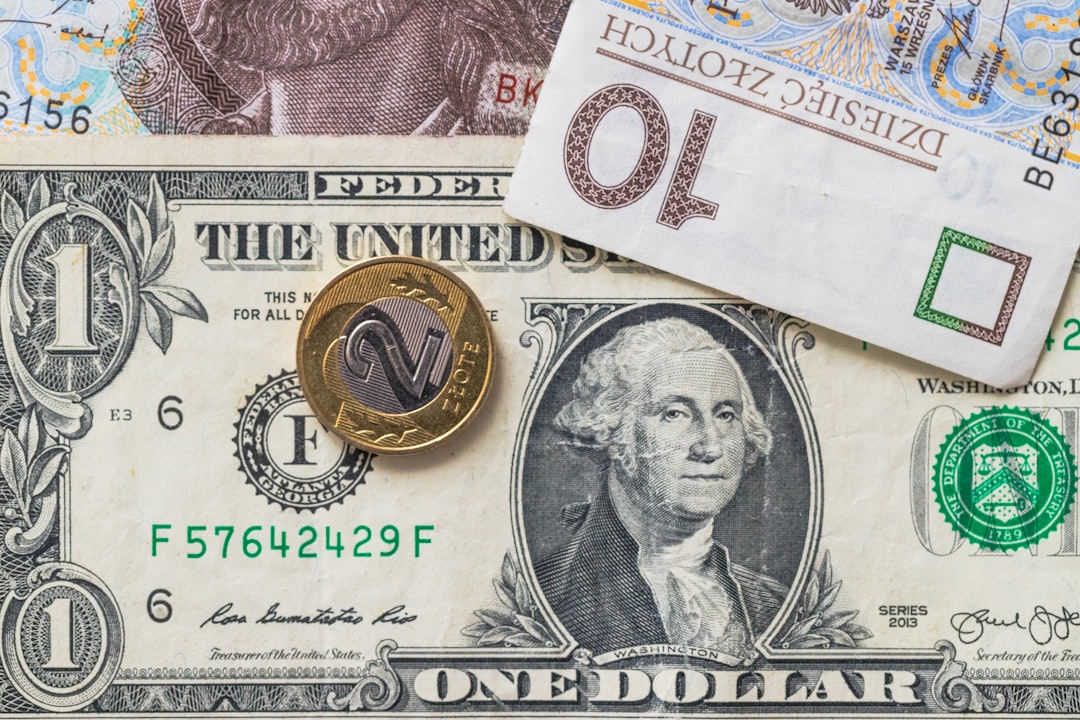
The Dollar’s Dual Personality in 2026
Here’s what’s actually happening at the macro level. The US dollar in 2026 reveals a currency in a position of temporary strength but with growing vulnerabilities. That’s a critical distinction — “temporary” vs. “structural.” The Fed has been the primary engine of that strength. The dollar has been elevated by geopolitical risk, oil price pressure, and the Federal Reserve holding rates at 3.50–3.75% with no cuts expected before late 2026.
But here’s the kicker — the dollar’s dominance isn’t monolithic. Tariffs create a dual effect: they strengthen the dollar by reducing imports and attracting domestic investment, but weaken it by increasing production costs and inviting trade retaliation. The net effect has been positive for the dollar in 2026. Meanwhile, despite diversification efforts, the dollar maintains approximately 58% of global reserves, according to International Monetary Fund data.
The broader trajectory, however, points toward eventual softening. The US dollar outlook for 2026 follows a peak-then-decline pattern. Near-term strength from geopolitical risk and delayed Fed cuts gives way to expected weakness in the second half of the year as rate cuts approach and safe-haven demand unwinds. And critically, most forecasts expect DXY to trade 92–98, with a bias toward the low-90s by year-end if rate cuts materialise.
How Dollar Strength Actually Hurts Emerging Markets — The IMF Data Tells a Stark Story
Let’s not sugarcoat the mechanics. The IMF has been clear on what a strong dollar does to developing economies. In emerging market economies, a 10 percent US dollar appreciation, linked to global financial market forces, decreases economic output by 1.9 percent after one year, and this drag lingers for two and a half years. That’s not a rounding error — that’s a meaningful growth shock that compounds over time.
The pain isn’t one-dimensional either. Emerging market economies also tend to suffer disproportionately across other key metrics: worsening credit availability, diminished capital inflows, tighter monetary policy on impact, and bigger stock-market declines. And there’s a critical split between “Core” and “Periphery” EM nations that most mainstream coverage misses entirely.
The median sovereign spread across Periphery EMs has increased by 45 bps to 332 bps, whereas the median spread on Core EM debt has increased by only 4 bps over the same period. That divergence is enormous — it tells you the crisis risk is highly concentrated in specific, structurally weaker economies rather than being a blanket EM problem.
The “Carry Unwind” Trap: The Hidden Risk Nobody’s Talking About
One of the sneakiest risks in 2026’s EM landscape is the carry trade crowding problem. Some investors are increasingly focused on so-called “High Carry” currencies — the currencies of countries with high interest rates and relatively stable economies. Think Mexico, Brazil, and India. These countries have kept real rates high to fight inflation.
But when everyone piles into the same trade, the exit door shrinks fast. A sudden spike in volatility can cause a “carry unwind,” where everyone rushes to sell their EM currencies and buy back dollars at once. That’s the black swan scenario EM investors need to price in — not gradual dollar strength, but a sudden, violent reversal of crowded carry positions.

Not All Emerging Markets Are Created Equal — Country-Level Breakdown
This is where sophisticated investors separate themselves from the crowd. The 2026 EM story isn’t a monolith. Growth projections indicate emerging markets will reach 3.9% in 2026, up from 3.7% in 2025. However, Southeast Asia and Middle East expansion contrasts sharply with subdued Latin America and Eastern Europe performance.
Turkey is a particularly cautionary tale. Turkey occupies a difficult middle ground. While not in crisis, it faces persistent inflation, slower reform momentum, and structural constraints that limit forward movement. Meanwhile, sovereign bond issuance should reach approximately $260 billion, with Türkiye facing the largest financing needs.
On the flip side, the structural reform story in many Core EMs is genuinely compelling. Historically, EMs had little option but to issue debt primarily in U.S. dollars (the so-called “original sin”), exposing their public finances to exchange rate movements. Core EMs gradually expanded their domestic capital markets and broadened their local investor base, enabling governments to issue a larger share of debt in domestic currency.
And here’s a fact that reframes the whole crisis narrative: In 2025, the EM sovereign default rate was 0%, and analysts are anticipating 2026 will also be a benign year for sovereign defaults.
What the Research Houses Are Actually Saying in 2026
Let’s look at what major institutional voices are positioned around right now:
- PineBridge Investments: Expects a continuation of resilient exports, declining inflation, and accommodative monetary policy in 2026, suggesting EM can not only deliver carry-driven returns but also outperform other public bond markets.
- Morgan Stanley: EM debt was supported by a weakening U.S. dollar, easing monetary policy by many EM central banks, and tightening credit spreads. Looking ahead, robust investor demand for non-dollar assets and EM real yields that continue to exceed those in developed markets are driving a constructive 2026 outlook.
- Janus Henderson: Uncertainty appears to have weighed more heavily on the US than on the rest of the world, signalling that markets are beginning to differentiate between types of volatility rather than reflexively treating EM as the weakest link — a positive structural development for the asset class.
- AllianzGI: Many emerging market countries enjoy strengthening policymaking frameworks and generally stable politics, leading to improved macro fundamentals and sovereign credit rating upgrades — contrasting sharply with policy uncertainty in developed countries, notably the US.
- LPL Research: After a stellar 2025 in which emerging market equities returned 34%, 2026 is off to a good start with the MSCI EM Index up 7% year to date.
- CreditSights: Sovereign spreads appear uncomfortably tight despite strong fundamentals, meaning mean-reversion risks are intensifying. However, FX reserves strengthen to 135% short-term debt coverage, limiting balance-of-payments crisis risks significantly.
- William Blair: Attractive valuations suggest room for currency appreciation, as the U.S. dollar remains in overvalued territory. EM currencies are expected to perform well against the dollar and currencies of other developed markets.
The Shifting Safe-Haven Paradigm — A Structural Signal
Perhaps the most underappreciated story of 2026 is how the dollar’s role as a crisis currency is evolving. The US dollar is losing its traditional crisis premium as investors diversify safe-haven assets amid geopolitical tensions and evolving global market dynamics. The weakening dollar amid geopolitical tension signals a shift in how investors view safe-haven assets.
This matters enormously for EM investors because historically, any global shock triggered a reflexive dollar rally that crushed EM assets. Recent US-centric volatility — highlighted by the ‘Liberation Day’ tariff announcement — has spurred a global search for diversification that is likely to persist. The old playbook of “crisis = sell EM, buy USD” is being quietly retired.
Realistic Strategies for Navigating This Landscape
So what do you actually do with all this? The binary choice of “EM is in crisis, sell everything” vs. “EM is booming, buy everything” is a false dichotomy. Here’s what the data supports:
- Selective country allocation over broad EM exposure: The opportunity lies in identifying countries that combine scale, geopolitical balance, capital strength, and technological adaptability. In this environment, broad allocation is less effective than targeted selection.
- Hedge your carry positions: With carry trades crowded in Brazil, Mexico, and India, have a defined stop-loss framework. The exit during a carry unwind is never orderly.
- Diversify into local currency EM debt: A combination of rate cuts, central bank credibility, and a weaker USD will continue to be key in driving local currency debt returns. A continued downtrend in the US dollar should provide a tailwind — EM currencies remain undervalued versus the dollar.
- Watch for Fed pivot timing: Global interest rates remain a critical factor. If major central banks, especially the US Federal Reserve, continue to gradually ease rates, this could support capital flows into emerging markets as investors seek higher yields.
- Use currency-hedged instruments during volatility spikes: Strategies include diversification across multiple currencies, using currency-hedged ETFs, investing in commodities like gold, and holding positions in inflation-indexed bonds.
- Monitor Periphery EM spreads as an early warning system: Higher spreads and downgrades raise the cost of rolling over existing debt and can limit access to external financing when funding needs are greatest.
Editor’s Comment : The “2026 dollar strength = emerging market crisis” framing is an oversimplification that could lead investors to make very expensive mistakes — in both directions. Yes, dollar strength creates real structural pain for vulnerable Periphery EM economies, and carry trade crowding is a genuine tail risk that deserves respect. But the data in 2026 is telling a more complex story: Core EMs have done the structural homework, default rates are near zero, and the dollar’s safe-haven monopoly is eroding. Rather than treating EM as a monolithic risk-on/risk-off trade, the real edge in 2026 is granular country selection, disciplined carry risk management, and positioning for the Fed’s eventual easing cycle. Don’t let the headline fear drive you out of the market entirely — but don’t get lazy with broad EM ETF exposure either. The spread between winners and losers in emerging markets this year will likely be wider than it’s been in a decade.
📚 관련된 다른 글도 읽어 보세요
- Global Inflation Hedge: The 2026 Investor’s Complete Guide to Commodity Investing
- 월가도 쉬쉬하는 2026년 중국 GDP 4.5% 쇼크: 한국 주식·원자재 투자자 필독
- 월가도 숨기는 2026 원자재 슈퍼사이클 진짜 수혜주: 금·구리·은 지금 사도 되나?
태그: 2026 dollar strength, emerging market crisis, USD forex 2026, EM debt outlook, carry trade risk, emerging market investment strategy, DXY emerging markets
Leave a Reply