A colleague of mine — a sharp, no-nonsense portfolio manager who’s been in the game for nearly two decades — called me late one evening earlier this year. He’d just watched his bond allocation take a quiet, grinding hit while his grocery bill somehow kept climbing. “I feel like I’m doing everything right,” he said, “and still losing ground.” Sound familiar? That phone call sent me down a rabbit hole I hadn’t visited in a while: the world of commodity investing as a global inflation hedge. And what I found in 2026 is nothing short of fascinating — and urgent.
If you’re holding cash or traditional bonds while inflation quietly nibbles at your purchasing power, this guide is for you. Let’s walk through the data, the strategies, and the real assets that have historically (and right now, actively) punched back against rising prices.
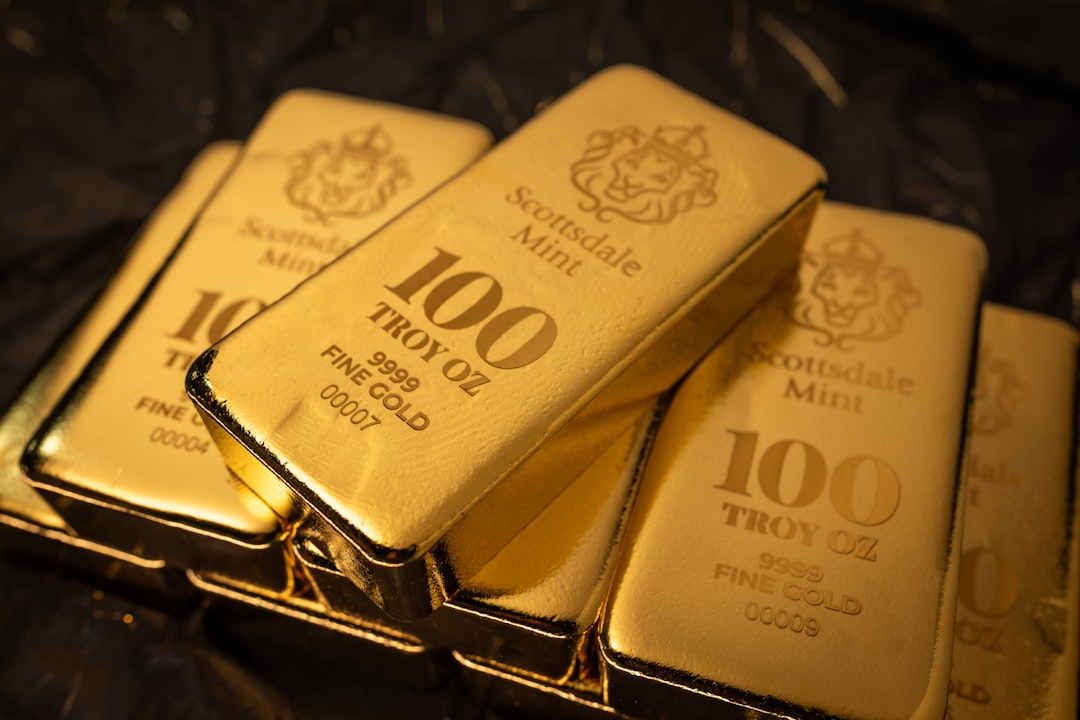
Why Commodities Are the Inflation Fighter You Might Be Ignoring
Inflation is an economic condition that erodes the purchasing power of money, leading to higher prices across the economy. As inflation increases, many investors look for ways to protect their wealth — and commodities have long been considered a hedge against inflation due to their tangible nature and intrinsic value.
Here’s the hard data that should make every investor sit up straight: a 1 percentage point surprise increase in US inflation has, on average, led to a real (inflation-adjusted) return gain of 7 percentage points for commodities, while that same trigger caused stocks and bonds to decline 3 and 4 percentage points, respectively, according to Goldman Sachs Research. That asymmetry is the entire argument for commodities in a single sentence.
And it gets more compelling. During any 12-month period when both stocks and bonds had negative real returns, either commodities or gold delivered positive performance, according to Goldman Sachs Research. That’s not a coincidence — it’s a structural relationship.
The 2026 Commodity Landscape: What the Numbers Are Telling Us Right Now
Let’s not talk theory in a vacuum. The commodity market in 2026 is a live, volatile story. Gold rose more than 1% on Tuesday, recovering from a near one-week low, as hopes of a resolution to geopolitical tensions weighed on the dollar and eased inflation concerns. Spot gold was up 1.1% at $4,788.76 per ounce. That’s not a typo — gold is trading in the $4,700–$4,800 range as of mid-April 2026.
From 2024 through early 2026, gold prices have surged to new highs, driven by a mix of geopolitical uncertainty, record investment demand, and substantial buying from emerging market central banks. This trend underscores gold’s enduring role as a safe haven during times of economic uncertainty and its appeal as a hedge against systemic risks and inflation.
Silver is equally compelling. Silver is stepping into 2026 with completely different energy. After breaking above $55 at the end of 2025 and holding the $50–$54 zone as a real base, the metal has shifted from “the forgotten asset” to one of the most powerful stories in commodities, with year-to-date gains near 120%, having not just outperformed gold but rewritten the narrative after almost a decade of lagging.
After breaking above resistance following a 120% surge in 2025, silver has entered price-discovery territory, with a fifth consecutive year of structural supply deficit and accelerating industrial demand supporting targets beyond $65.
The Four Commodity Categories You Need to Know
Not all commodities hedge inflation equally. Goldman Sachs Research breaks this down clearly by category:
- ⚡ Energy (Oil & Natural Gas): Historically, energy has generated the strongest real returns across assets when inflation surprised to the upside — because energy typically responds to both supply and demand shocks. While refined oil products remain the most important commodity for global consumer prices, recent episodes have shown that natural gas has significant inflation-hedging benefits as well.
- 🥇 Precious Metals (Gold & Silver): Gold’s appeal lies in its scarcity and independence from any single government or currency. During periods of high inflation or monetary instability, investors often turn to gold as a hedge against currency devaluation. Meanwhile, silver is often used in industrial applications such as electronics and solar panels, providing additional demand beyond its role as a store of value — a demand that contributes to price growth, particularly during economic expansion and inflation, making silver a solid alternative for those seeking a more affordable precious metal to hedge against inflation.
- 🏗️ Industrial Metals (Copper, Platinum): Given their large exposure to cyclical manufacturing and the housing sector, industrial metals have demonstrated they could offer protection against demand-led inflation, generating especially high returns — averaging total real returns of 30% — late in the cycle when economy-wide inflation risks are the largest. Copper specifically: copper is widely used in construction, electronics, and infrastructure development. As the demand for copper rises, especially in emerging markets and green energy projects, the price of copper tends to increase as well.
- 🌾 Agriculture (Wheat, Corn, Coffee): Agricultural commodities such as wheat, corn, soybeans, and coffee tend to rise in price during inflationary times, especially when supply chain disruptions or weather-related issues affect global crops. A shortage in production, combined with rising demand, often leads to higher prices for agricultural commodities.
Real-World Case Studies: Who Got This Right?
Let’s talk about what institutions and data sources are actually saying and doing in 2026:
Goldman Sachs Research has been vocal: to protect portfolios of stocks and bonds against unexpected tail risks, investors should consider diversifying through gold as well as a range of other commodities. Equity-bond portfolios aren’t well protected against stagnant economic growth and elevated inflation — particularly when global policy uncertainty is elevated or when the economy is hit by a supply shock.
UBS Global Wealth Management has taken a clear stance: they see gold as the preferred hedge asset at this stage for its diversification potential. Trading at above $4,630/oz, gold has risen over 7% this year following a near 65% gain in 2025. Despite the strong rally, UBS expects gold prices to move higher, seeing bullion reaching $5,000/oz in coming months amid hedging demand stemming from ongoing macroeconomic, policy, and geopolitical concerns.
VanEck’s Gold Investment Outlook adds hard performance data: over the past year, gold has delivered an annualized return of roughly 65% — nearly four times the return of U.S. stocks and more than eight times that of U.S. bonds. Over two and three years, gold’s annualized returns of approximately 45% and 33%, respectively, have roughly doubled those of U.S. equities.
Bloomberg’s Commodity Outlook flags a structural theme worth watching: tight supply balances for industrial metals and a pickup in economic growth after tariffs have been digested could be the forces behind industrial metals increasing in value versus precious metals in 2026.
Morningstar offers a nuanced counterpoint worth knowing: commodities were more consistent as an inflation hedge — outpacing inflation in all five historical periods studied, while gold fell behind in two of the five periods. In other words, don’t put all your eggs in the gold basket; a broader commodity basket often outperforms.
How to Actually Invest: Your Practical Toolkit
You don’t need to store gold bars in a vault or trade crude oil futures on a commodities exchange. Here are the most accessible ways to build a commodity inflation hedge in 2026:
- Commodity ETFs (Broad Exposure): You can invest in commodities through ETFs like $DBC (broad commodity exposure) or $PDBC (actively managed). These funds track prices of energy, metals, and agriculture without requiring futures contracts. For more targeted exposure, consider sector-specific ETFs (e.g., energy or agriculture) or stocks of commodity-producing companies.
- Metals & Mining ETFs: The SPDR S&P Metals & Mining ETF (XME) gained 13% during the highly inflationary environment of 2022, versus a negative 18% total return for the S&P 500.
- Physical Gold: For investors who value independence and liquidity, owning physical gold is a powerful way to hedge against inflation — it’s a hard asset you can hold in your hand, free from digital or institutional control.
- TIPS (Treasury Inflation-Protected Securities): Inflation-linked bonds such as Treasury Inflation-Protected Securities in the United States are specifically designed to protect investors from inflation, with their principal value adjusting with changes in the consumer price index, ensuring that returns maintain real purchasing power.
- Natural Gas Plays: Recent NGI trends position natural gas as a relative winner in the commodity space for 2026, with export terminals on the Gulf Coast running full capacity to send American gas across the ocean.
- Platinum & Palladium: Beyond jewelry, platinum is crucial for the hydrogen economy and catalytic converters in hybrid vehicles. As the world hedges its bets between pure EVs and hybrids, platinum demand finds new support.
The Risk Management Layer: What You Must Not Ignore
A cool-headed investor always looks at both sides of the ledger. Here’s the honest risk picture:
Commodities can be volatile and do not generate income. Their prices are influenced by global demand, technological changes, and geopolitical events. This makes them better suited as a portion of a diversified portfolio rather than a standalone strategy.
The April 2026 market snapshot is a perfect teaching moment: as of April 14, 2026, the intensifying military blockade in the Strait of Hormuz sent crude oil prices soaring past triple digits, effectively eliminating market hopes for interest rate cuts and forcing a massive liquidation in the precious metals sector, with SPDR Gold Shares (GLD) and the iShares Silver Trust (SLV) recording their largest multi-day outflows in years as investors fled toward the US Dollar. Even “safe haven” trades aren’t risk-free in the short term.
The smart play? Investors should determine their risk tolerance and investment horizon to develop a balanced portfolio that includes commodities, TIPS, and alternatives like precious metals. Combining traditional investments such as stocks and bonds with alternative assets can create a robust inflation hedge portfolio — an approach that enhances exposure to diverse investment opportunities, potentially improving overall returns while mitigating the impact of inflation on purchasing power.
And don’t forget to rebalance: regularly rebalancing a portfolio ensures that it remains aligned with an investor’s goals and risk tolerance. As inflation and market conditions change, adjustments may be necessary to maintain the desired asset allocation, ensuring the portfolio continues to provide effective inflation protection.
The Rare Earth & Industrial Metal Wild Card for 2026
Here’s the angle most retail investors completely miss. Industrial metals and rare earth minerals’ direct weight in the inflation basket has been rising as the energy mix shifts from fossil fuels to renewables. Industrial metals and rare earths stand out because refining is highly concentrated in China — meaning even with only an indirect impact on inflation, such as the cost of electric vehicle batteries, a disruption could have an outsized effect.
Analysts at Goldman have named industrial metals and rare earth minerals amongst the commodities which may afford protection to your portfolio and help insulate your wealth from inflation. This is the frontier play — higher risk, but potentially asymmetric upside in a world of supply chain fragmentation.
Editor’s Comment : If you’re feeling the pinch of inflation in 2026 — and almost every investor is — the instinct to “do something” is correct. But that “something” doesn’t have to be a dramatic overhaul. Start with a 5–10% allocation to a broad commodity ETF like DBC or PDBC, consider layering in a gold position (physical or via GLD) as a geopolitical shock absorber, and look at copper-focused plays as your long-term green energy bet. You don’t have to pick a single winner. The data from Goldman, UBS, Morningstar, and Bloomberg all point to the same core truth: a diversified basket of hard assets, rebalanced with discipline, is the most reliable armor against inflation’s slow erosion of your wealth. The market in April 2026 is noisy and volatile — but that volatility itself is the argument for holding real assets, not running from them.
📚 관련된 다른 글도 읽어 보세요
- 2026 Inflation Trends & Consumer Price Analysis: What’s Actually Happening to Your Wallet Right Now
- Global Debt Crisis & Financial Market Instability in 2026: What’s Really Happening and How to Protect Yourself
- Is Inflation Coming Back? A Hard Look at the Macro Forces Shaping 2026
태그: []
Leave a Reply