A colleague of mine — a mid-career finance professional who had been quietly watching his savings erode — told me something at a dinner last month that stuck with me: “I used to think keeping cash was the safe move. Now I feel like I’m bleeding out slowly every single year.” That conversation is exactly why I wanted to dig deep into the world of inflation hedge commodity investing in 2026. Because if you’re asking “what should I actually own to protect my purchasing power?” — you’re not alone, and the answer is more nuanced than most headlines suggest.
Let’s think through this together, with real data, institutional research, and a healthy dose of skepticism.
Why Commodities? The Core Inflation-Hedging Logic
Commodities are the building blocks of goods and services, so when production costs go up, commodity prices typically follow — making investing in commodities a direct way to gain exposure to inflationary trends. That’s the foundational argument, and it’s not just theory.
According to Goldman Sachs Research, commodities have demonstrated strong resilience in the face of inflation and have been a critical hedge for bonds and equities when prices and wages are climbing. Specifically, a 1 percentage point surprise increase in US inflation has, on average, led to a real return gain of 7 percentage points for commodities, while that same trigger caused stocks and bonds to decline 3 and 4 percentage points, respectively.
That’s a staggering asymmetry. And it’s exactly the kind of data-driven argument that should shape how you build your portfolio in 2026.
The 2026 Inflation Landscape: Why This Year Matters
The Peterson Institute suggests inflation could exceed 4% by the end of 2026, making scarce assets vital for wealth preservation. Meanwhile, the US enters 2026 with elevated government spending, persistent inflation pockets, and real yields that have been drifting lower. This combination — fiscal pressure plus weakening real yields — is precisely the environment where hard assets historically shine.
The effectiveness of inflation hedge investments can be influenced by various factors, including geopolitical stability, supply chain disruptions, and monetary policy — and investors must consider how these factors interact with inflation trends to make informed decisions.
Gold: Still the Undisputed King — But Read the Fine Print
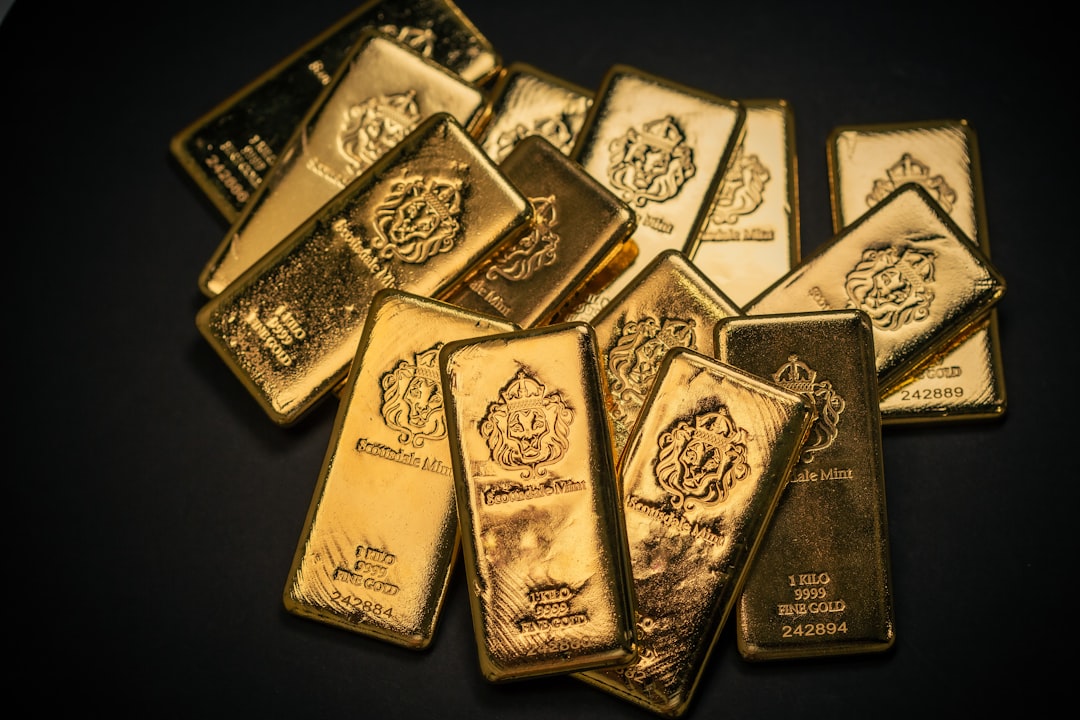
Gold enters 2026 with declining real yields, elevated government spending, and structural central bank demand still intact. Major banks forecast gold prices at $4,500–$4,700, with upside toward $5,000 if macro conditions persist.
J.P. Morgan Global Research is forecasting gold prices to average $5,055/oz by the final quarter of 2026, rising toward $5,400/oz by the end of 2027. That’s a bold call, but it’s rooted in structural demand data. Central banks themselves have been major gold buyers, with purchases more than doubling since 2022 compared to pre-2020 averages — providing a firm floor under the market.
Gold and precious metals are an exception among commodities, and gold should be the preferred choice when the aim is for longer-term inflation protection. That’s not cheerleading — it’s the conclusion of long-run return studies comparing gold against energy, grains, and industrial metals over twenty-year horizons.
Silver: The Overlooked Asymmetric Play
After breaking above its resistance zone following a 120% surge in 2025, silver has entered price-discovery territory. A fifth consecutive year of structural supply deficit and accelerating industrial demand support targets beyond $65.
Silver is often used in industrial applications such as electronics and solar panels, which provides additional demand beyond its role as a store of value. This demand can contribute to price growth, particularly in times of economic expansion and inflation — making silver a solid alternative for those seeking a more affordable precious metal to hedge against inflation.
Copper and Industrial Metals: The “Green Inflation” Angle
Despite the recent rally in copper prices, Goldman Sachs notes it remains their “favorite” industrial metal, especially in the long run, as electrification — which drives nearly half of copper demand — implies structurally strong demand growth, and copper mine supply faces unique constraints.
Copper is used as a raw material in the building of homes, in electric vehicles, in cookware, in solar power collectors, and in all manner of wind energy elements, including turbines and power supply — making it a commodity to watch carefully as various industries rely on it with greater frequency.
Industrial metals may outperform precious metals in 2026 as supply deficits, infrastructure investment, and post-tariff growth support copper, aluminum, and nickel prices — with geopolitical conflict, weather-driven disruptions, and rising power demand from AI and data centers reinforcing commodities’ role in portfolios amid volatility and stagflation risk.
Energy Commodities: Handle With Care
Oil is a trickier story in 2026. Goldman Sachs forecasts Brent and WTI crude oil to decline to 2026 averages of $56 per barrel and $52 per barrel, respectively. Supply is expected to continue growing in 2026 while demand remains sluggish, expanding by less than 1 million barrels per day — meaning the oil market is likely to face a sizable surplus.
That said, energy has historically generated the strongest real returns across assets when inflation surprised to the upside, because energy usually responded both to supply and demand shocks — and while refined oil products remain the most important commodity for global consumer prices, natural gas has significant inflation hedging benefits as well.
Key Commodities to Consider for Inflation Hedging in 2026
- Gold: Gold has been considered a safe-haven investment for centuries, particularly during periods of inflation. When the value of fiat currencies declines, gold tends to maintain or increase in value — because it is a tangible asset with limited supply, not directly influenced by the actions of central banks or governments.
- Silver: Silver shares many of the same inflation-hedging properties as gold, but is more affordable and accessible for individual investors. While gold dominates precious metals discussions, silver can offer greater price volatility, which could lead to higher returns in a rising inflation environment.
- Copper: As the demand for copper rises, especially in emerging markets and green energy projects, its price tends to increase — and during inflationary periods, copper prices often rise due to increased demand for raw materials and rising costs of production.
- Natural Gas: NGI trends position natural gas as a relative winner in the commodity space for 2026. Export terminals on the Gulf Coast are running full capacity to send American gas across the ocean — a structural shift meaning domestic prices are increasingly linked to higher global benchmarks, capturing the spread between cheap US production and expensive global demand.
- Agricultural Commodities: Agricultural commodities such as wheat, corn, soybeans, and coffee tend to rise in price during inflationary times, especially when supply chain disruptions or weather-related issues affect global crops — as a shortage in production, combined with rising demand, often leads to higher prices.
- Platinum: China is seeing a resurgence in platinum jewelry demand, and beyond jewelry, platinum is crucial for the hydrogen economy and catalytic converters in hybrid vehicles — meaning as the world hedges between pure EVs and hybrids, platinum demand finds new support.
- Commodity ETFs (e.g., DBC, PDBC, XME): You can invest in commodities through ETFs like $DBC (broad commodity exposure) or $PDBC (actively managed), which track prices of energy, metals, and agriculture without requiring futures contracts. For more targeted exposure, consider sector-specific ETFs or stocks of commodity-producing companies.
International Case Studies & Institutional Positioning
The Bloomberg Commodity Index (BCOM) total return has risen 11% annualized so far in the 2020s — a compelling track record that has drawn institutional attention globally. In South Korea, major pension funds including the National Pension Service (NPS) have incrementally raised their alternative asset allocation, with commodities and real assets forming a growing slice. Globally, sovereign wealth funds from Norway to Singapore have used commodity futures and gold allocations as structural inflation buffers.
The SPDR S&P Metals & Mining ETF (XME) gained 13% during the highly inflationary environment of 2022, versus a negative 18% total return for the S&P 500 — a real-world demonstration of how commodity exposure can act as a portfolio shock absorber.
Central banks themselves have been major gold buyers, with purchases more than doubling since 2022 compared to pre-2020 averages. This isn’t retail speculation — it’s institutional-level conviction in hard asset preservation.
The Honest Caveats: What the Data Also Tells Us
Here’s where I’ll push back on the simple “just buy commodities” narrative — because the data deserves honesty.
To broadly state that commodities are great inflation hedges is not entirely correct. Over the long term, many commodities do not broadly hold up against inflation. Not all commodities are good inflation hedges — in fact, over the past twenty years, gold and precious metals appear to be the only commodities that have done an admirable job protecting purchasing power and increasing in real value.
The effectiveness of any hedge depends on horizon and regime. Over twelve-month horizons some assets react to an inflation surprise, while over multi-year horizons those relationships can weaken or reverse as policy and the macroeconomy adjust. No single asset class provides a permanent hedge against unexpected inflation.
Risks include market volatility, liquidity risks, and regulatory changes that can impact the effectiveness and performance of inflation hedge investments. Commodities can be brutally cyclical — they move in defined cycles and are not buy-and-hold forever investments. Within a short period of time, commodities surge higher then subsequently crash back down.
Practical Strategies: Building Your 2026 Inflation-Hedge Commodity Portfolio
When it comes to hedging against inflation, diversification is key, but it’s how you diversify that counts. Assets that may strengthen your portfolio in the face of inflation include utility stocks and real estate as well as copper and gold.
A balanced approach might include:
- A core gold allocation (physical, ETF, or gold-backed accounts) as a long-term anchor
- Silver for upside asymmetry in the current supply-deficit cycle
- Copper via ETFs or mining stocks for green-energy demand exposure
- A small allocation to broad commodity ETFs (DBC/PDBC) for diversified inflation sensitivity
- For the fixed-income side, consider inflation-linked securities — instruments that link cash flows to a consumer price index, such as Treasury Inflation-Protected Securities (TIPS) and their equivalents elsewhere — government bonds that index principal and coupon payments to the consumer-price index.
If your goal is to build an inflation-resistant portfolio, you don’t have to invest only in commodities. But by incorporating them into a diversified investment strategy, you can prepare your portfolio to not only weather the effects of inflation but also come out even stronger on the other side.
Editor’s Comment : The biggest mistake I see investors make in 2026 is treating commodity investing as an all-or-nothing bet. You don’t have to go full “gold bug” or bet the ranch on oil futures to benefit from inflation protection. Think of commodities as the immune system of your portfolio — not the main engine. Start with gold as a stable anchor (even a 5–10% allocation has historically made a measurable difference), layer in copper for the green energy megatrend, and use broad commodity ETFs to smooth the volatility. And crucially: revisit your allocation every quarter. In a world where geopolitical shocks can move commodity markets 10% in a week, the investor who adjusts thoughtfully will always outperform the one who set-and-forgot.
📚 관련된 다른 글도 읽어 보세요
- Fed Rate Cuts in 2026: What’s Really Happening to Markets and Your Portfolio
- 월가가 절대 안 알려주는 인플레이션 헤지 원자재 TOP 4: 금·은·구리·원유 2026 완전분석
- 월가도 숨기는 진짜 인플레이션 방어법: 글로벌 원자재 투자 핵심 ETF 5종 [2026 완전판]
태그: []
Leave a Reply