A few months ago, I was grabbing coffee with a friend who manages a mid-sized commodity-focused fund. He slid his laptop across the table and pointed at a chart — copper futures, lithium prices, gold at record highs. “It’s here,” he said, almost whispering. “The super cycle.” He sounded like someone who had just spotted a comet. But then I looked at what was happening on the other side of his screen — iron ore down, oil sliding, the World Bank flashing warning signs. That moment stuck with me. Because the real story of commodities in 2026 isn’t a single comet — it’s a sky full of different constellations, moving in different directions, all at once. Let’s think through this together.
What Exactly Is a Commodity Super Cycle? (And Why Does It Matter Right Now)
Before diving into the 2026 data, let’s level-set on the concept itself. A commodity supercycle refers to an extended period — often lasting 20 to 30 years — when commodity prices remain well above (or below) their long-term trends, driven by large, structural shifts in global demand and supply. These aren’t your garden-variety price spikes from weather events or geopolitical flare-ups. Unlike short-term market fluctuations caused by weather, speculation, or temporary disruptions, supercycles are secular phenomena, shaped by deep forces such as industrial revolutions, population growth, technological change, or large-scale investment cycles.
Economists typically identify four major commodity supercycles since the industrial era, each tied to transformative global events. The first known supercycle coincided with the Second Industrial Revolution, when the rapid expansion of railways, steel, and manufacturing in the United States and Europe drove surging demand for copper, steel, coal, and agricultural commodities. The most recent one? The early 2000s–2011 cycle, driven by rapid industrialisation in China, which spurred unprecedented demand for steel, copper, and energy.
Now, in 2026, the question isn’t just “are we in one?” — it’s “which version of a supercycle are we actually in?”
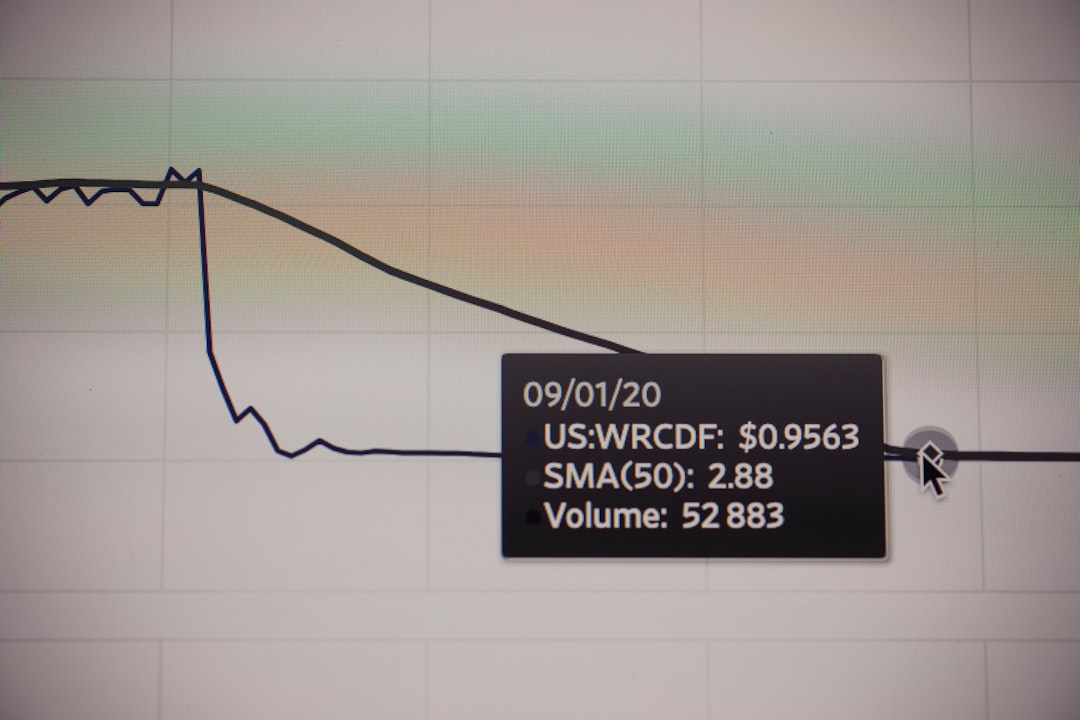
The Bull Case: Structural Demand That’s Different This Time
Commodity Super-Cycle 2.0 refers to a potential long-duration macro regime in which global demand for critical raw materials structurally exceeds supply, driven by electrification, energy transition, and geopolitical fragmentation. Unlike short-term commodity rallies driven by economic cycles, this phase is characterised by multi-year pricing persistence, where structural demand drivers reshape global commodity markets.
What makes this cycle structurally different from the China-driven boom of the 2000s? Commodity Super-Cycle 2.0 is not driven solely by industrial expansion, but by global energy system transformation and resource security policies — creating a persistent demand floor rather than a cyclical spike. On top of that, AI-related infrastructure is a less discussed but increasingly important driver; grid capacity expansion is required to support digital load growth, introducing a second structural demand layer beyond energy transition.
The supply side isn’t helping either. The previous decade saw structurally weak capital expenditure across the mining and energy sectors, and as a result, supply elasticity remains extremely low, even when prices rise. From a technical investing standpoint, it looks like we are already in a new supercycle for commodities, wrapped up from a cyclical bear market (from 2022–2024), now set against a structural bull case of underinvestment in supply, thematic demand drivers such as electrification and energy transition, AI & robotics, and geopolitics.
The Bear Case: World Bank’s Cold Water on the Super Cycle Thesis
Here’s where it gets really interesting — and where risk management thinking becomes essential. Not everyone is singing from the same hymn sheet.
The World Bank’s latest “Commodity Markets Outlook,” released in early February 2026, forecasts that commodity prices will plummet to their lowest levels in six years — marking the fourth consecutive year of retreating prices, signaling the definitive end of the post-pandemic price surge.
With Brent crude projected to average just $60 per barrel in 2026, down from $81 in 2024, the fiscal stability of major exporters is being put to the test. The culprits? An unprecedented oil surplus, a structural slowdown in Chinese demand, and the unstoppable rise of EVs are rewriting the rules of the market. Specifically, in China alone, over 40% of new car sales were electric or hybrid by the start of 2026, permanently displacing traditional fuel demand.
Oxford Economics echoes similar caution: they maintain a more bearish outlook for commodities in 2026, reflecting below-consensus expectations for economic and industrial growth, with commodity prices as measured by the S&P Goldman Sachs Commodity Index forecast to decline by 0.9% in 2026. However, stabilisation is expected by the second half of the year, with a more meaningful upturn in prices anticipated in 2027.
The 2026 Commodity Divergence Map: Winners and Losers
This is the crux of what separates savvy analysis from lazy “commodities are going up” takes. A defining feature in 2026 is structural divergence: price behavior is increasingly driven by each commodity’s specific exposure to physical scarcity, monetary realignment and reserve behavior, and technology-led demand shocks — especially those tied to AI infrastructure. In practical terms, 2026 looks less like a single “commodities trade” and more like a set of distinct micro-markets.
Here’s a breakdown of the key commodity segments and their 2026 dynamics:
- Gold 🥇: Gold in 2026 is increasingly framed not merely as an inflation hedge, but as a strategic reserve asset in a financial system perceived as more geopolitically “weaponized.” Major Korean investment banks (대신증권 included) see precious metals entering a rotation phase rather than a full retreat.
- Silver 🪙: Silver acts as both a precious metal and a potentially supply-constrained industrial input. China’s moves to tighten silver export controls add a geopolitical scarcity layer on top of green-energy demand.
- Copper ⚡: Recent supply disruptions have intensified the problem — Freeport-McMoRan’s Grasberg mine in Indonesia faced major operational issues in late 2025, forcing force majeure and 2026 production cuts, while First Quantum’s Cobre Panama mine has been offline since November 2023. These two operations alone previously supplied approximately 2% of global copper demand.
- Uranium ☢️: A “lost decade” of uranium underinvestment suggests that existing production coverage can look deceptively healthy while legacy mines deplete. The demand side is shaped by expanding reactor build plans and a longer-term expectation of higher capacity by 2040, including potential incremental demand from small modular reactor concepts.
- Oil 🛢️: Global commodity prices are projected to plunge to a six-year low by end of 2026, led by a staggering 10% decline in energy costs, primarily driven by a massive global oil surplus.
- Agriculture 🌾: Agriculture presents a split tape: protein tightness can persist while grains remain more weather- and supply-cycle dependent.
- Iron Ore / Base Metals 🏗️: Rio Tinto and Vale S.A. are particularly vulnerable due to their reliance on iron ore, which is expected to see price drops of 4% in 2026 following a 10% slide in 2025.
Global Case Studies: Who’s Navigating This Right?
Looking at real-world corporate positioning gives us ground truth beyond macro forecasts.
BHP Group (ASX: BHP) offers a textbook hedging case: while BHP will feel the pinch from falling iron ore prices, its significant investment in copper — a metal essential for the energy transition — may provide a buffer that its more iron-dependent peers lack.
Newmont (NYSE: NEM) and Barrick Gold (NYSE: GOLD) sit on the winning side of the divergence: the primary “winners” in this environment are the precious metal miners, with Newmont and Barrick Gold poised to benefit as gold remains the sole commodity group projected to see price increases through 2026.
From a Korea-specific angle, Daishin Securities analyzed that commodity markets, against a backdrop of global liquidity changes and Chinese economic stimulus, are entering a rotation from precious metals toward base metals. Meanwhile, on the critical materials front, helium and tungsten oxide prices used in semiconductor processes have been surging, with Bank of America estimating spot helium prices spiked up to 40% week-over-week.
For portfolio construction, EBC Financial Group and Bloomberg Commodity Index (BCOM) advocates make a compelling point: the opportunity lies not in chasing individual metals, but in understanding how diversified commodity exposure can capture the multi-year trend while managing concentration risk. And if you’re thinking about time horizons: if this is indeed a structural supercycle, it could extend well into the 2030s or even toward 2045 — but volatility will be significant, with corrections of 20–30% likely even within a long-term bull market.
Key Risk Factors You Cannot Ignore in 2026
- China’s Structural Slowdown: Chinese residential real estate remains weak, with home prices expected to continue declining into 2026. Historically, this sector has been a major copper consumer — however, China’s pivot toward high-tech manufacturing, EVs, and grid infrastructure is providing an offset.
- Trade Policy Volatility: Tariff threats, particularly from the United States, have created volatility — copper prices spiked in 2025 partly due to traders rushing to import material ahead of potential tariffs, then corrected sharply when refined copper was temporarily exempted.
- The “Trade Hangover” Effect: The World Bank notes that the “front-loading” of trade in 2025 — a defensive move by corporations to move goods before new tariffs — has left a vacuum in 2026, creating a “trade hangover” suppressing demand for raw materials.
- Investor Under-Allocation: Investor sentiment is lukewarm and allocations are historically low — most of the uptick in commodity allocations is due to precious metals, with allocations to commodities ex-gold near record lows.
- Geopolitical Wild Cards: Energy markets remain geopolitically sensitive, with the Russia-Ukraine situation and Middle East tensions capable of reversing short-term trajectories overnight.
Realistic Strategies: How to Position for a Fragmented Cycle
The bottom line isn’t “commodities are good” or “commodities are bad” — it’s that the old playbook of buying a broad commodities basket and waiting no longer works. 2026 will not be friendly to “one-size-fits-all” commodity exposure. Do not look for a “rising tide lifts all boats” trend — instead, performance is likely to accrue to positions aligned with the specific scarcity mechanisms.
Here are realistic alternatives to naive super cycle bets:
- Scarcity-driven metals (copper, silver, uranium) over traditional energy plays — target positions tied to electrification capex and AI infrastructure demand.
- Diversified ETFs like BCOM-linked products rather than single-commodity futures, which carry roll costs and contango risks over long horizons.
- Mining equity selectivity: Prefer producers with copper/gold exposure (BHP, Newmont) over pure iron ore or coal plays.
- Portfolio sizing discipline: For most portfolios, commodity exposure of 5–15% provides meaningful diversification without excessive risk.
- Watch China’s pivots closely: Grid infrastructure and EV-related metals demand from China could flip the narrative on base metals faster than consensus expects.
- Prepare for 2027: Reduced investment in mining and energy in 2024 and 2025 could tighten supply further down the line — commodity cycles often swing between periods of over- and underinvestment, meaning weak prices today could create shortages and higher prices in the years beyond 2026.
The commodity super cycle of 2026 is real — but it’s wearing a very different costume than the one from the 2000s. It’s not a single wave; it’s a collection of micro-tides, each with its own physics. The winners will be those who read the terrain rather than just the headline.
Editor’s Comment : Having tracked commodity cycles for over a decade, what strikes me most about 2026 is how the “super cycle” debate has become almost a Rorschach test — bulls see electrification demand and supply deficits; bears see a cooling China and oil glut. Both are right, about different commodities. My personal framework: stay structurally long on copper and silver for 3–5 year horizons (the electrification story isn’t going away), stay tactically nimble on energy (oil at $60 is a very different game than $80), and treat gold less as a trade and more as permanent macro insurance in a world where sovereign debt levels are permanently elevated. Don’t let the headline “super cycle” narrative do your thinking for you — in 2026, granularity is everything.
📚 관련된 다른 글도 읽어 보세요
- 2026년 글로벌 부채 위기 총정리 — 금융시장 불안정성, 지금 어디까지 왔나?
- 원자재 ETF 투자 방법 완벽 가이드 2026 | 초보자도 쉽게 시작하는 실전 전략
- 2026 Global Commodities Investment Strategy: What the Smart Money Is Doing Right Now
태그: commodity super cycle 2026, raw materials investment outlook, copper gold silver 2026, energy transition metals, commodity market analysis, 원자재 슈퍼사이클, critical minerals investing
Leave a Reply