Picture a massive stone dropped into the center of a still lake. The ripples don’t just spread — they bounce off the shores, overlap, and reshape the entire surface of the water. That’s essentially what’s happening right now with China’s economic slowdown, and whether you’re a small business owner in Ohio, a tech entrepreneur in Berlin, or a commodity trader in Sydney, you’re feeling those ripples whether you realize it or not.
As of early 2026, China’s GDP growth has settled into a range that would have been considered a crisis just a decade ago. The world’s second-largest economy is no longer the unstoppable engine it once was — and that changes everything for global markets, supply chains, and investment strategies.

Where China Stands Right Now: The Numbers Behind the Narrative
Let’s ground ourselves in what’s actually happening. China’s GDP growth in 2025 clocked in at approximately 4.2%, a figure that sounds respectable on its face but represents a meaningful deceleration from the 8–10% growth rates that defined the 2000s and early 2010s. Forecasts for 2026 are hovering in the 3.8–4.5% range, depending on the source — and several international institutions are quietly revising those numbers downward.
What’s driving this? A few structural forces that aren’t going away anytime soon:
- Property sector debt overhang: The collapse of major developers like Evergrande and Country Garden left a multi-trillion yuan wound in China’s financial system. Real estate, which once accounted for nearly 25–30% of GDP activity, is still struggling to find a stable floor.
- Demographic headwinds: China’s working-age population has been shrinking since the early 2020s. Fewer workers means lower productivity potential — it’s straightforward math with long-term consequences.
- Deflationary pressure: Consumer price inflation in China has been persistently low or even negative in some months, signaling weak domestic demand. When people aren’t spending, the engine stalls.
- Technology decoupling: Ongoing restrictions on semiconductor exports from the U.S. and allied nations have constrained China’s ability to move up the value chain in key industries.
- Youth unemployment crisis: Urban youth unemployment has remained stubbornly elevated, suppressing consumer confidence among the demographic that should be powering domestic consumption growth.
How This Plays Out Globally: The Sectors Most at Risk
Here’s where it gets really interesting — and frankly, concerning — for the rest of the world. China doesn’t just participate in the global economy; in many sectors, it is the demand story. When that demand softens, the consequences are wide-ranging.
Commodity exporters take the first hit. Australia, Brazil, and several African nations built significant portions of their export revenues around Chinese demand for iron ore, copper, and agricultural products. With Chinese construction activity sluggish and industrial output cooling, commodity prices have faced persistent downward pressure through 2025 and into 2026. Brazil’s soybean exports, for instance, have seen price compression even as volume held relatively steady — a margin squeeze that’s hitting Brazilian agribusiness hard.
Southeast Asian manufacturing hubs face a double-edged reality. On one hand, companies diversifying supply chains away from China have boosted investment in Vietnam, Indonesia, and Thailand. On the other hand, these countries still rely heavily on Chinese intermediate goods and Chinese tourists. A weaker China means less tourism revenue and more complex supply chain dynamics — not the clean win many expected from the “China+1” diversification strategy.
European luxury and automotive sectors are feeling genuine pain. China became the largest market for premium German automobiles and French luxury goods. As Chinese middle-class confidence wavers, brands like BMW, Mercedes-Benz, LVMH, and Kering have all cited China weakness as a material drag on 2025 earnings — and 2026 guidance is cautious at best.
The Supply Chain Realignment: Not as Simple as It Looks
There’s a tempting narrative that goes like this: China slows down → manufacturing moves elsewhere → problem solved for global businesses. If only it were that clean.
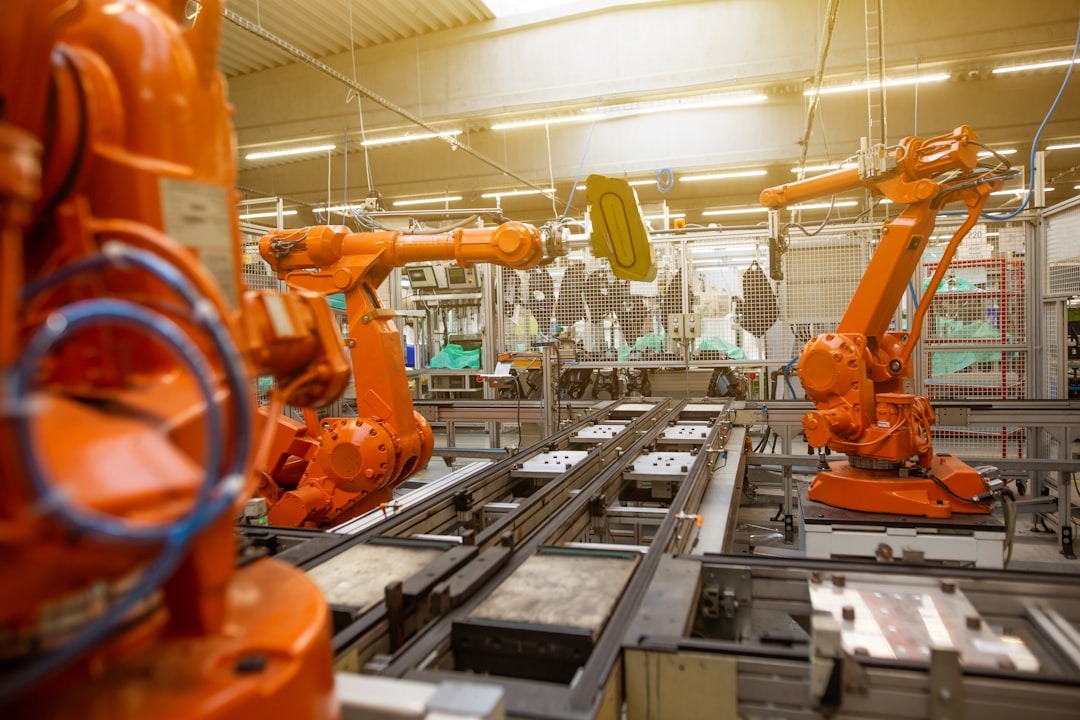
The reality is that China remains deeply embedded in global supply chains, not just as a manufacturer but as a processor of raw materials and a supplier of intermediate components. Even products “made in Vietnam” or “assembled in Mexico” often contain Chinese inputs. A meaningful slowdown in Chinese industrial activity disrupts these upstream flows in ways that take years to fully reroute.
Consider the solar panel industry, where China controls an estimated 80%+ of global manufacturing capacity. As countries accelerate green energy transitions in 2026, they simultaneously need Chinese panels and want to reduce dependence on them — a tension that’s playing out in trade policy, subsidy battles, and supply shortages in markets that rushed to diversify too quickly.
Financial Markets: The Contagion Risk That Keeps Analysts Up at Night
Beyond the real economy, there’s the question of financial contagion. China’s property sector debt crisis has largely been managed through a combination of government intervention, debt restructuring, and financial repression — but the underlying risks haven’t disappeared, they’ve been redistributed.
Local government financing vehicles (LGFVs) in China are carrying debt loads that many analysts consider unsustainable without central government support. If that support wavers, or if a disorderly default event occurs, the shock to Asian credit markets could be swift and severe, with spillover effects into emerging market bond funds that many retail investors hold without fully understanding the exposure.
Realistic Alternatives: How Businesses and Investors Can Adapt
Okay, so we’ve looked at the problem from multiple angles — now let’s think through what actually makes sense to do about it, whether you’re running a business or managing a personal investment portfolio.
For businesses with China exposure, the honest advice is to stop waiting for a dramatic Chinese economic rebound and start building for a structurally different reality. That means genuine supply chain diversification (not just a token factory in Vietnam), developing alternative customer relationships in India, the Middle East, and Southeast Asia, and stress-testing your revenue models against a scenario where Chinese demand stays at current levels for the next three to five years.
For investors, the China slowdown argues for a more nuanced emerging market strategy rather than a blanket “avoid EM” stance. India’s growth trajectory remains structurally compelling. Indonesia’s domestic consumption story is increasingly self-sufficient. Latin American commodity exporters with diversified customer bases offer different risk profiles than pure China plays.
For policymakers and governments, the China slowdown is actually an argument for accelerating domestic industrial policy — not in a protectionist panic, but in a strategic, long-term investment in capabilities that reduce single-point-of-failure dependencies. The countries that will navigate this most successfully are those that use this moment as a catalyst for genuine structural reform rather than defensive reaction.
And for everyday consumers? The China slowdown may actually mean more competitive pricing on certain categories — electronics, home goods, apparel — as Chinese manufacturers seek to maintain volume by competing harder on price in export markets. That’s a short-term silver lining worth noting, even as the broader picture remains complex.
The bottom line is this: China’s economic trajectory in 2026 isn’t a temporary blip that global markets can wait out. It represents a structural shift in the architecture of global growth — one that demands proactive adaptation, not passive observation. The ripples are here. The question is whether you’re positioned to navigate them or be knocked over by them.
Editor’s Comment : What strikes me most about this moment is how many businesses and investors are still operating on mental models built during China’s hypergrowth era — essentially waiting for the old China to come back. It won’t, at least not in the same form. The smartest move right now isn’t panic or paralysis; it’s honest reassessment. Ask yourself: does my current strategy assume a China that no longer exists? If the answer makes you uncomfortable, that discomfort is actually productive — it’s the first step toward building something more resilient for the years ahead.
태그: [‘China economic slowdown 2026’, ‘global trade impact’, ‘supply chain diversification’, ’emerging markets investment’, ‘China GDP growth’, ‘global recession risk’, ‘geopolitical economics’]
Leave a Reply