Picture this: it’s early 2026, and a finance minister in a mid-sized emerging economy wakes up to find that overnight currency swap lines have dried up, the central bank’s foreign reserves have dropped below three months of import cover, and the local currency has shed 18% of its value in a single trading session. Sound dramatic? It happened to Sri Lanka in 2022, Turkey in 2021, and Argentina — well, Argentina has made something of a habit of it. The point is, currency crises in emerging markets don’t appear out of nowhere. They brew quietly, signal loudly (to those paying attention), and then erupt in ways that ripple far beyond the country in question.
So let’s sit down together and work through what the data is telling us in 2026, which economies are flashing amber or red, and — crucially — what you as an investor, traveler, or policy-curious reader can actually do about it.
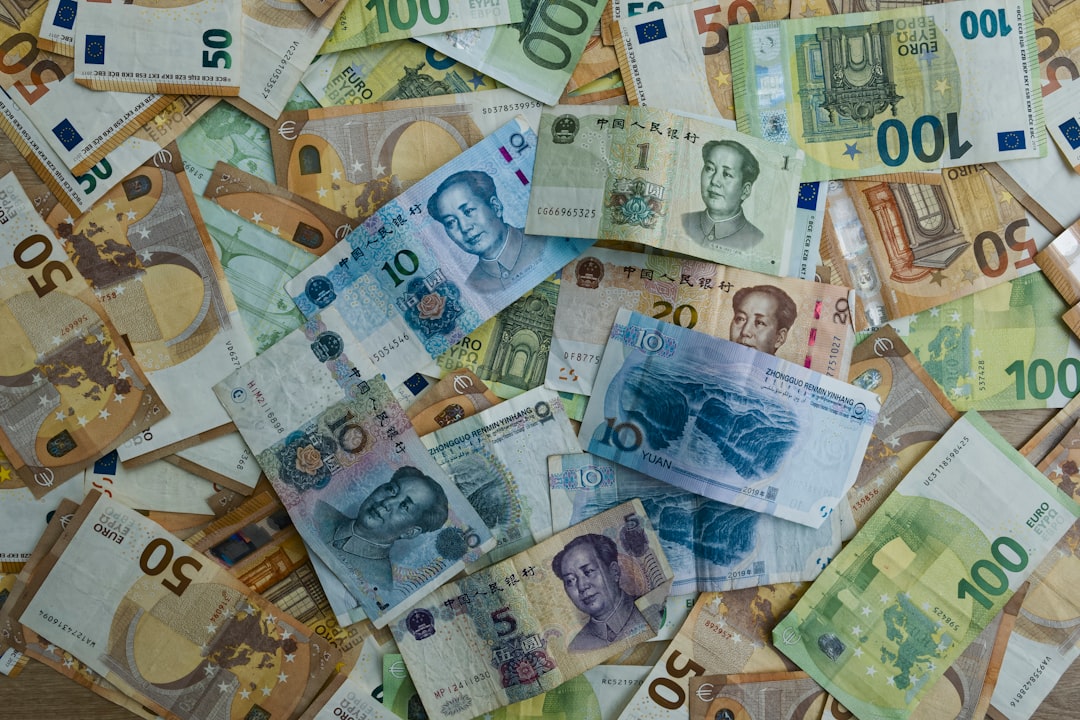
Why Currency Crises Happen: The Core Mechanics
Before we dive into numbers, let’s make sure we’re all on the same page about the machinery. A currency crisis typically unfolds through one of three well-studied channels — and sometimes all three at once:
- Balance of Payments Crisis (First-Generation Model): A country runs chronic current account deficits, burns through foreign reserves defending a fixed or managed exchange rate, and eventually can no longer sustain the peg. The currency collapses. Think Mexico 1994.
- Self-Fulfilling Speculative Attack (Second-Generation Model): Even with decent fundamentals, if market participants collectively believe a devaluation is coming, they short the currency en masse — and the expectation itself causes the crisis. The 1992 ERM crisis that famously broke the Bank of England fits here.
- Balance Sheet Crisis (Third-Generation Model): Corporations or banks borrow heavily in foreign currency (usually USD) while earning revenues in local currency. When the exchange rate moves against them, their liabilities balloon and the financial system seizes up. Indonesia and South Korea in 1997–98 are textbook cases.
In 2026, the most dangerous environment for emerging markets combines elements of all three: elevated USD interest rates (the Fed funds rate is still sitting in a restrictive 4.25–4.50% range as of Q1 2026), persistent dollar strength, and corporate debt loads that ballooned during the ultra-cheap money era of 2020–2021.
The Key Risk Indicators to Watch in 2026
Let’s get specific. When analysts at the IMF, BIS, or a sell-side shop screen for currency crisis vulnerability, they’re typically running through a checklist of macroeconomic tripwires. Here’s what the dashboard looks like right now:
- Foreign Reserve Cover: Less than 3 months of import cover is a classic danger zone. As of early 2026, Pakistan sits at roughly 2.1 months, Ethiopia at under 2 months, and several Sub-Saharan African nations remain critically low despite IMF support programs.
- External Debt to GDP Ratio: When external debt crosses 60–70% of GDP and a large portion is short-term, rollover risk becomes acute. Argentina’s external debt (excluding IMF obligations) remains structurally problematic, hovering near 55% of GDP even after repeated restructurings.
- Current Account Deficit: A deficit above 5% of GDP, if financed by volatile portfolio flows rather than stable FDI, is a warning flag. Egypt and Kenya are both navigating deficits in the 4–6% range under considerable stress.
- Real Interest Rate Differential: Emerging market central banks need to offer sufficiently positive real rates to attract capital inflows. When the Fed holds rates high and a local central bank is forced to cut to stimulate growth, the differential narrows — and carry traders exit, weakening the currency.
- Dollarization of Private Sector Debt: The share of corporate borrowing denominated in foreign currency. In Turkey, despite policy shifts, roughly 40% of the corporate sector’s liabilities remain FX-denominated as of 2026.
Country Case Studies: Who’s in the Hot Seat in 2026?
Let’s look at a handful of economies that are generating serious conversation among EM specialists right now.
Egypt: The Egyptian pound went through a painful managed devaluation cycle in 2023–2024 and has since stabilized under an IMF Extended Fund Facility. But the structural vulnerabilities haven’t disappeared. Tourism revenues and Suez Canal fees — Egypt’s two biggest FX earners — remain sensitive to geopolitical disruption. If either stumbles, the current account math gets ugly fast. As of Q1 2026, Egypt’s central bank holds approximately $38–40 billion in net foreign reserves, which sounds substantial but includes IMF drawings and FX swaps that aren’t freely usable. The net usable reserve picture is considerably thinner.
Turkey: Turkey has been the “perennial crisis candidate” of EM watchers for years, but the post-2023 policy pivot toward orthodox monetary policy has genuinely changed the picture. The central bank raised rates aggressively, and inflation, while still elevated (around 40% year-on-year in early 2026), has been trending down from its 85% peak. The lira has stabilized in a managed float. The risk now is political: if there’s pressure to ease rates prematurely ahead of any electoral cycle, the inflation-exchange rate feedback loop could re-ignite.
Nigeria: The naira’s multiple devaluation episodes in 2023–2024, and the subsequent unification of the exchange rate windows, were necessary but painful. Nigeria’s challenge in 2026 is the oil revenue paradox — the country sits on enormous hydrocarbon wealth but oil theft, pipeline vandalism, and underinvestment mean actual export volumes consistently disappoint. With oil production still below 1.5 million barrels per day against a budget assumption closer to 1.78 million, the fiscal and FX pressure is structural.
Pakistan: Pakistan completed its IMF Stand-By Arrangement in 2024 and is now in a longer-term Extended Fund Facility. Reserves have rebuilt somewhat, but the economy remains in a fragile equilibrium. Any external shock — an oil price spike, a drought that requires emergency food imports, or a geopolitical flare-up in the region — could rapidly erode the progress made.

The Systemic Risk Dimension: Contagion in 2026
Here’s where things get interesting from a global perspective. Currency crises rarely stay neatly contained within one country’s borders, especially in a world of instant capital flows and interconnected supply chains. The contagion mechanisms we need to think about in 2026 include:
- Trade finance seizure: When a major EM economy’s currency crashes, letters of credit become difficult to issue, and regional trading partners see their exports disrupted.
- Banking sector exposure: European banks — particularly from France, Spain, and Italy — have historically had significant loan books in EM economies. A systemic crisis in a major EM borrower can show up on European bank balance sheets uncomfortably quickly.
- Commodity price feedback: Several vulnerable EM economies are commodity exporters. A currency crisis can actually temporarily boost their export revenues in local currency terms, but it also raises the cost of imported inputs, creating complex second-order effects.
- Sentiment-driven selloffs: When one EM currency breaks down visibly, algorithmic and macro hedge fund strategies often trigger broader EM currency basket shorts, hitting even fundamentally sound economies like India, Brazil, or Indonesia with unjustified volatility.
Realistic Alternatives: What Can You Actually Do?
Okay, so we’ve established the landscape. Now the practical question: what does this mean for you specifically, depending on who you are?
If you’re an individual investor with EM exposure: Review your allocation to EM bond funds, particularly those with high weights in frontier markets or single-country EM ETFs. The difference between a “diversified EM” fund and one heavily concentrated in two or three vulnerable economies is enormous. Look at the fund’s hedge ratio and whether it has currency-hedged share classes. Also consider that some EM currencies — the Indian rupee, Brazilian real, and Indonesian rupiah — are in a fundamentally different category from the higher-risk names we’ve discussed. Don’t throw the baby out with the bathwater.
If you’re a business with cross-border supply chains: Now is an excellent time to audit your FX exposure map. Where are your key suppliers? Are you paying them in local currency or USD? If USD, you’re actually somewhat insulated from local currency crisis risk — but your supplier isn’t, and a crisis that devastates their working capital could disrupt your supply chain regardless of the currency denomination. Supplier diversification and building strategic inventory buffers are practical hedges here.
If you’re traveling to or relocating to an EM country: Currency crises create genuine logistical nightmares — ATM cash limits, parallel exchange rate markets, and sudden import restrictions on certain goods. If you’re going somewhere on the watchlist, keep a buffer of hard currency (USD or EUR cash, not just card), register with your home country’s embassy, and have contingency flights planned. It sounds dramatic, but it’s just sensible preparation.
If you’re a policy-curious reader: Push for coverage of IMF governance reform in your media consumption and civic engagement. The IMF’s lending facilities — particularly the Flexible Credit Line and the Resilience and Sustainability Trust — are genuinely useful tools, but access is too slow and stigmatized for many at-risk countries to use them preemptively. Reform here would actually reduce crisis frequency.
The Bigger Picture: Structural Solutions vs. Firefighting
It’s worth stepping back and acknowledging that the EM currency crisis cycle is, in many ways, a structural feature of the current international monetary system rather than a bug that can be fixed with better fiscal management alone. The dollar’s dominance in global trade invoicing and financial contracts means that when the Fed tightens, every dollar-indebted emerging economy faces a headwind that has nothing to do with their own policy decisions. This is what economists call the “original sin” problem — the inability of smaller economies to borrow internationally in their own currencies — and it hasn’t been solved in 2026, despite years of discussion about SDR reform and regional currency arrangements.
Progress is happening incrementally: ASEAN’s local currency transaction framework has expanded, the BIS’s regional reserve pooling mechanisms have deepened, and several EM central banks have built far more sophisticated FX derivative markets than existed a decade ago. But we’re not at the point where a developing economy can fully insulate itself from the transmission of US monetary policy. Understanding that context is essential for anyone trying to make sense of the headlines.
Editor’s Comment : Currency crises feel abstract until they’re not — until a remittance transfer to family abroad goes through at a rate 30% worse than it was six months ago, or until a factory that sources components from a crisis-hit country finds its supply chain suddenly broken. The goal of working through this analysis together isn’t to generate anxiety, but to build the kind of informed radar that turns a headline into actionable understanding. Watch the reserves, watch the real rate differentials, watch the political will behind orthodox policy — and when multiple signals align, take them seriously before the market does.
태그: [’emerging market currency crisis 2026′, ‘EM currency risk analysis’, ‘foreign exchange risk emerging markets’, ‘currency devaluation 2026’, ‘IMF emerging market debt’, ‘dollar dominance developing economies’, ‘EM investing strategy 2026’]
Leave a Reply