A few weeks ago, a friend of mine — let’s call him Jay — called me in a mild panic. He’d just wired money from his Korean bank account to pay for a software subscription in the U.S., and the transaction hit him harder than he expected. “Didn’t the won used to be around 1,200 to the dollar?” he asked, genuinely bewildered. That conversation stuck with me, because Jay’s confusion mirrors what millions of Koreans and Korea-watchers are feeling right now in 2026. The won is weak, the headlines are loud, and most people don’t know what to actually do about it.
Let’s cut through the noise together and look at what’s really happening — with real data, real institutional forecasts, and some practical angles you can act on.
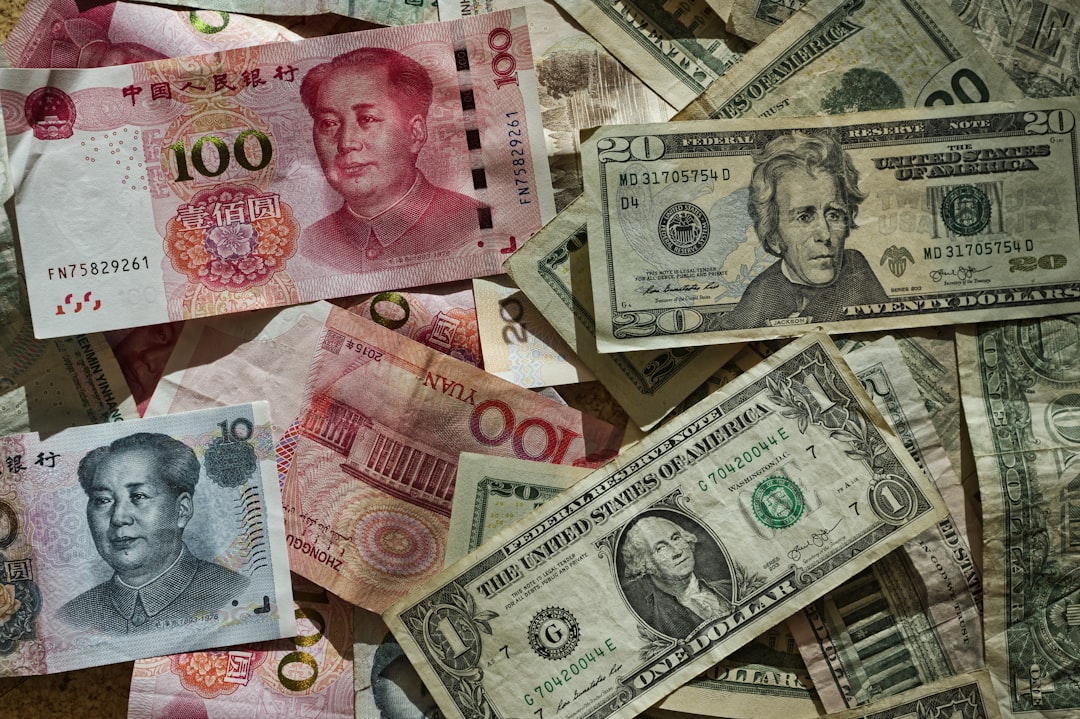
📊 Where Does the Won Stand Right Now? (April 2026)
The South Korean won has been trading near 1,480 per dollar, remaining under pressure as elevated oil prices and a firm US dollar have weighed on the currency despite improved risk sentiment. That’s a far cry from the 1,200-range many Koreans remember fondly.
With the Korean won poised to post its weakest year on record, global investment banks expected the currency’s weakness to persist into the new year, with levels above 1,400 won per US dollar becoming the norm in 2026. And sure enough, that’s exactly where we are.
For context: the IMF’s estimate of the won’s “fair value” sits around 1,330, based on 2024 trends when the currency averaged about 1,346 per dollar. We’re now trading significantly above that fair value — which raises the obvious question: why?
🔍 The Real Reasons Behind Won Weakness in 2026
This isn’t a one-variable story. Let’s break it down systematically:
- Interest Rate Differential: The U.S. Federal Reserve’s benchmark rate stands at 3.75–4.00%, while the Bank of Korea sits at 2.50% — a gap of up to 1.5 percentage points. This differential has driven foreign capital outflows, adding pressure to the won.
- Korean Retail Investor Outflows (“Seohakaenami”): Korean retail investors have net purchased US$51 billion in foreign securities in 2025, and continued strong retail demand for foreign exchange assets remains a significant risk that could undermine government stabilization efforts.
- Oil Price Sensitivity: Crude prices have stayed high amid lingering uncertainty surrounding the Middle East conflict, increasing Korea’s import bill and reinforcing structural demand for the greenback.
- Geopolitical Pressures: Geopolitical uncertainty has continued to sustain safe-haven demand, and high oil prices have added to the burden on the won through persistent import-related dollar demand.
- Structural Capital Outflows: Overseas investments, particularly in U.S. equities and direct investments, have surged, increasing demand for the dollar. Net foreign assets now largely determine FX movements — while increased NFA boosts external financial stability, it also maintains pressure on the KRW.
- US–Korea Trade Deal Commitments: Korea’s commitment in Trump administration trade negotiations to invest up to $350 billion — with up to $20 billion annually flowing into the U.S. — has also been cited as a structural driver of won weakness.
- Weak Growth Fundamentals: The IMF projected Korea’s growth at 0.9% for 2025 and 1.8% for 2026 — an improvement, but not a full return to strong growth that would draw capital back in.
📈 What Do the Forecasts Actually Say for the Rest of 2026?
Forecasters are split — which honestly tells you something about how uncertain this market is. Here’s what the major data sources are projecting:
In 2026, the exchange rate between the US dollar and the South Korean Won is anticipated to range between ₩1,488.57 and ₩1,799.16, leading to an average annualized price of ₩1,652.95 — according to CoinCodex’s technical model, which leans quite bearish on the won.
On the more moderate side, analytical forecasts suggest USD/KRW may reach ₩1,397.65 by end of 2026, with December fluctuating between 1,395.38 and 1,452.34, averaging near 1,423.86.
LongForecast.com paints a more volatile second half: for October 2026, the forecast starts at 1,480, with a high of 1,547 and an average of 1,508, ending the month at 1,524.
Meanwhile, Bank of America maintains its outlook that USD/KRW will continue declining throughout 2026, supported by forecasts of a weaker U.S. dollar globally and more balanced portfolio flows due to the World Government Bond Index (WGBI) inclusion of Korean Treasury Bonds starting in April 2026. That’s actually one of the more bullish signals for the won this year.

🌐 What Global Institutions and Banks Are Watching
The Bank of Korea itself has been active. On February 26, 2026, the Bank of Korea left its Base Rate unchanged at 2.50%, signaling that policymakers are still balancing growth support against exchange-rate and financial-stability risks.
On January 14, 2026, U.S. Treasury Secretary Scott Bessent met with Korea’s Deputy Prime Minister in Washington and stated that the sharp weakness in the won was inconsistent with Korea’s solid economic fundamentals. That kind of bilateral diplomatic pressure is unusual — and significant.
Furthermore, on January 30, 2026, the U.S. Treasury Department re-designated South Korea as a “currency monitoring country.” This adds another layer of external pressure on Korean policymakers to stabilize the won.
ING Think’s Asia FX Outlook offers a nuanced structural view: the surge in overseas investments by Korean institutions — particularly into U.S. assets — could act as a counterweight to gains from valuation and rate differentials. This structural outflow dynamic limits the upside for KRW, even in a weaker USD environment.
Still, there’s a silver lining from Korea’s macro side: South Korea’s economy delivered a stronger-than-expected 1.7% expansion in the first quarter of 2026, marking a fast pace, driven by robust semiconductor exports and a rebound in facility investment and construction activity.
💡 Key Takeaways at a Glance
- 📌 Current Rate (Apr 2026): USD/KRW hovering around 1,475–1,490
- 📌 IMF Fair Value: ~1,330 won per dollar — we’re roughly 10–12% above “fair value”
- 📌 BofA View: Gradual won strengthening as WGBI inclusion attracts bond inflows
- 📌 Bearish Case (CoinCodex): Won could weaken further to 1,700+ range
- 📌 Rate Differential Risk: BOK at 2.50% vs. Fed at ~3.75–4.00% = continued capital flight pressure
- 📌 Structural Wildcard: Korean retail investors ($51B in foreign securities) are a key variable
- 📌 Policy Watch: US re-designation of Korea as FX monitoring country = government must walk carefully
🧭 Practical Strategies — What Can You Actually Do?
Rather than throwing up your hands, here are some realistic, data-backed angles to consider — whether you’re a retail investor, a business owner, or someone with cross-border financial exposure:
1. Don’t Time the Market — Ladder Your Conversions: If you need to exchange won to dollars (or vice versa), use a dollar-cost averaging approach — break your conversions into monthly tranches rather than betting on one rate.
2. Watch the WGBI Inflow Effect: The World Government Bond Index inclusion of Korean Treasury Bonds starting in April 2026 is a genuine structural tailwind for the won. As foreign bond demand builds, upward pressure on KRW is plausible by H2 2026.
3. Consider FX-Hedged Korean Bond Exposure: In 2026, foreign demand for Korean bonds is likely to continue with strong bond market fundamentals, making hedged bond strategies a way to benefit from yield without pure currency risk.
4. Businesses: Lock In Forward Rates: If your company has import obligations or dollar-denominated costs, now is a reasonable time to explore forward rate contracts through KEXIM or commercial banks to hedge downside.
A durable recovery in KRW would likely require a combination of steadier domestic growth, less exchange-rate volatility, narrower relative yield pressure, and more balanced capital flows — none of which happen overnight. So hedge, don’t hope.
Editor’s Comment : The 2026 won weakness story is less a crisis and more a structural repricing that’s been years in the making — driven by outward investment culture, geopolitical shocks, and rate differentials. The honest answer is: the won isn’t about to collapse, but a swift return to 1,200 is also not realistic in the near term. The smartest move isn’t to panic-buy dollars or panic-sell everything — it’s to stay informed, diversify your currency exposure thoughtfully, and keep an eye on the WGBI inflow data as a leading indicator for won recovery. Stay curious, stay hedged.
📚 관련된 다른 글도 읽어 보세요
- 공급망 이미 터졌다: 호르무즈·관세·희토류 3중 충격, 2026년 한국 기업 생존 전략 완전 정리
- 월가도 쉬쉬하는 2026년 중국 GDP 4.5% 쇼크: 한국 주식·원자재 투자자 필독
- 쪽박 차기 전 필독: 원자재 선물 투자 초보 완전 정복 가이드 2026 [금·원유·농산물 실전 비교]
태그: []
Leave a Reply