A friend of mine — a seasoned equity trader with about fifteen years under his belt — called me a few months ago, slightly frustrated. He’d been riding tech stocks hard, but volatility from tariff wars and macro uncertainty had him second-guessing his entire playbook. “I feel like I’m driving a sports car on black ice,” he said. That conversation stuck with me. What he was really asking, without saying it outright, was: where do you put your money when everything feels unstable? My answer? Let’s talk about gold, crude oil, and copper — a trio of commodities that, when structured thoughtfully into a portfolio, can act as both a shield and a spear.
Why Commodities Are Having Their Moment in 2026
Commodities are set to play a more prominent role in portfolios in 2026, with forecasts pointing to attractive returns, supported by supply-demand imbalances, heightened geopolitical risks, and long-term trends like the global energy transition. This isn’t just analyst fluff — the structural case for hard assets is genuinely compelling right now. Let’s break each leg of this three-legged stool down.
Gold: The Anchor That Keeps Getting Heavier
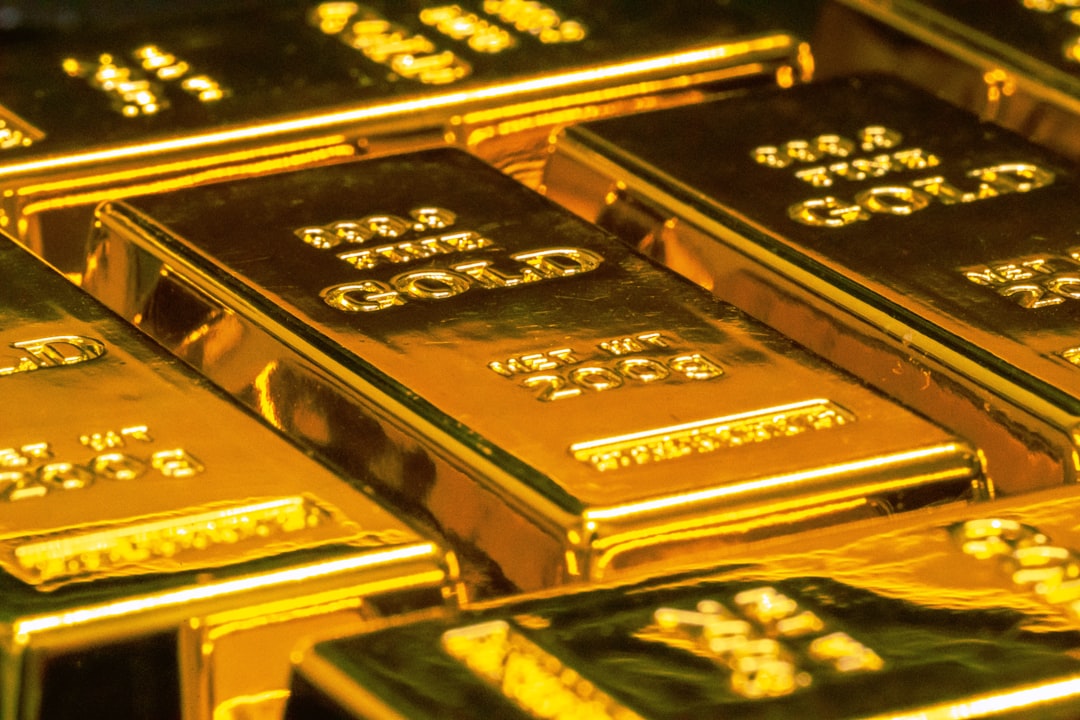
Gold has been the headline act for two years running, and it’s not slowing down. With gold surpassing $5,000 per ounce in January 2026, precious metals investing continues to attract capital amid geopolitical uncertainty and monetary debasement fears. What’s really fueling this? Central banks. Central banks purchased an estimated 290–300 tonnes of gold in 2025, marking the 15th consecutive year of net buying.
Central bank purchases of gold will ebb and flow with the gold price, but ultimately, the underlying motivations are less price sensitive — and purchasing will continue despite gold hitting record highs. The motivations include global economic uncertainty, security uncertainty, inflation, tariffs, and China’s push to promote the yuan as a reserve currency.
Goldman Sachs, for their part, is still bullish. Goldman Sachs sees gold prices climbing to $4,900 per ounce by December 2026 in their base case, citing structurally high central bank demand and cyclical support from U.S. Federal Reserve interest rate cuts. Meanwhile, UBS projects even higher: gold should post further gains, supported by central bank buying, large fiscal deficits, lower US real interest rates, and ongoing geopolitical risk.
From a portfolio construction standpoint, gold’s correlation advantage is hard to ignore. Gold’s correlation to the S&P 500 sits at approximately 0.1–0.3 over the long-term average (Morningstar data), making it one of the most effective diversifiers in any multi-asset portfolio.
Crude Oil: The Wildcard With a Second-Half Story
Oil is the most complex of the three — and if you’re expecting a straightforward bull case, prepare to be surprised. The consensus entering 2026 was bearish: Goldman Sachs forecast Brent and WTI crude oil to decline to 2026 averages of $56 per barrel and $52 per barrel, respectively. But geopolitics have a habit of rewriting forecasts overnight. By early March 2026, gold hit $5,413 and Brent surged above $80/bbl, driven by geopolitical shock events impacting tanker routes.
The medium-term picture for oil is more nuanced. For crude oil, UBS expects prices to start recovering in the second half of the year, as the current surplus should diminish with solid demand growth and moderating non-OPEC+ supply amid limited OPEC+ spare capacity. We enter 2026 with two oil market indicators at levels not seen since the shale revolution began in 2014: net long WTI futures contracts are at their lowest level since before 2014, and US commercial petroleum inventories are very near their lowest levels since 2014 — both potentially quite bullish for oil prices.
This is the “coiled spring” thesis — bearish sentiment, suppressed positioning, and lean inventories can snap back fast. Oil isn’t a “buy and forget” asset right now. It’s a tactical play, ideally entered on pullbacks with clearly defined stops.
Copper: The Structural Superstar Nobody’s Talking About Enough
If gold is the safe-haven anchor and oil is the volatile tactician, copper is the growth engine quietly running the whole show. Copper rose 43.93% in 2025, and its strength has carried into early 2026, with the copper price continuing to attain all-time highs, reaching $13,273.81 per metric ton.
Goldman Sachs calls copper its “favorite” industrial metal, especially in the long-run, as electrification — which drives nearly half of copper demand — implies structurally strong demand growth, and as copper mine supply faces unique constraints.
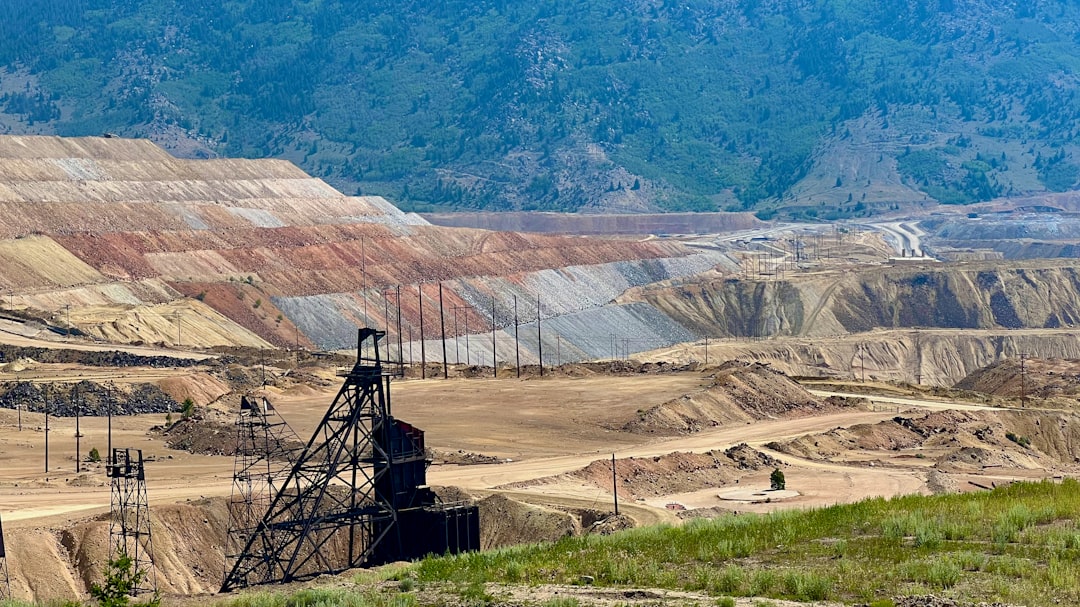
The supply side is genuinely alarming for anyone who’s looked at it closely. Banks are projecting copper in 2026 will have its biggest supply deficit in 22 years. Why? Copper mines take nearly 10 to 15 years to develop, and current supply shortages in the market due to mine closures are causing high volatility in copper prices. On the demand side, copper is necessary for wiring, data centres, next-generation power transmission, renewable energy, and power grids — with demand for copper used in AI infrastructure accelerating rapidly, as data centres can require up to 10 times the electrical load of traditional facilities.
Copper demand is projected to rise about 50% by 2040 while supply remains slow to respond, supporting a structural deficit and making it a preferred industrial exposure.
What the Big Institutions Are Actually Doing
It’s useful to look at how the major houses are structuring their commodity exposure — not to copy blindly, but to benchmark your own thinking.
Amundi Research suggests a “barbell approach” — combining gold for its hedging characteristics with selected industrial metals exposure like copper to capture the structural upside from electrification, AI, and infrastructure spending.
UBS notes that for investors with substantial allocations and significant unrealized profits in gold, broadening commodity exposure to include copper, aluminum, and agricultural assets can help diversify sources of future return.
Where mandates permit, committing at least 10% to alternative investments — strategies that can include commodity-focused funds, real assets, and other diversifiers — can provide valuable convexity against stagflationary shocks and geopolitical tail events.
Key Portfolio Data Points at a Glance
- Gold Price (Jan 2026): Surpassed $5,000/oz; Goldman target $4,900/oz by Dec 2026 (upside risks noted)
- Copper (LME, early 2026): All-time highs at $13,273.81/metric ton — 2026 projected to be the biggest supply deficit in 22 years
- Crude Oil (Brent baseline): Goldman forecasts $56/bbl average; geopolitical spikes can push toward $80+
- Central Bank Gold Demand: UBS projects 900 metric tons of central bank and sovereign wealth gold buying in 2026
- Copper Demand Growth: UBS expects demand to grow 2.8% in 2026, supported by global manufacturing expansion and robust Chinese EV and renewables consumption
- Gold-S&P 500 Correlation: ~0.1–0.3 (long-term Morningstar data) — highly effective diversifier
- Suggested Metals Allocation: VanEck (January 2026) recommends 5–15% in metals for inflation protection and volatility hedging
- Rebalancing Cadence: Quarterly; trim any position that exceeds its target weight by 10%
Practical Vehicles: How to Access Each Commodity
If you’re not trading futures directly, that’s completely fine — there are excellent alternatives. Investors can access commodities through diversified indices, exchange-traded funds (ETFs), exchange-traded commodities (ETCs), or structured investments. For gold, the most widely used ETF remains SPDR Gold Shares (GLD), while copper exposure can be gained through ETFs like Global X Copper Miners (COPX) or directly via LME-linked products. For oil, iPath Series B S&P GSCI Crude Oil ETN or energy sector ETFs like XLE offer relatively liquid exposure without the complexity of rolling futures contracts.
For those comfortable with individual equities, Barrick Gold emphasizes cost optimization and strong dividend generation, with strategic expansion into copper for dual commodity resilience and an estimated dividend yield of 2.3% for 2026. On the pure copper side, increased M&A activity reinforces the premium being placed on long-duration copper exposure, signaling that the largest miners are orienting portfolios toward copper.
Risk Management: The Part Most Investors Skip
Let’s be real — commodities are volatile. Investors should be aware of unique risks such as price swings and costs associated with futures or physical holdings. Here’s how to keep yourself honest:
- Position sizing: No more than 5–10% per individual stock or single commodity exposure
- Profit-taking rule: Sell 25% of a position after 50–100% gains to lock in capital
- Trailing stops: Trail stops 15–25% below peaks to ride momentum while protecting gains
- Oil-specific caution: Treat oil as a tactical, not strategic, position — geopolitical spikes can reverse as fast as they appear
- Scenario modeling: Instead of chasing price targets, model scenarios such as recessions, financial stresses, and supply outages, and size positions to reflect both probability and impact
Realistic Alternatives If Full Commodity Exposure Feels Too Heavy
Not everyone needs or wants a dedicated commodity sleeve. If a pure commodity allocation feels like too much, consider these options:
- Multi-asset commodity ETFs: Products like the iShares Bloomberg Roll Select Commodity Strategy ETF (CMDY) give blended exposure across gold, oil, and metals with built-in diversification.
- Commodity-linked equities: Investing in diversified miners (Barrick, Freeport-McMoRan) blends commodity upside with corporate earnings stability and dividends.
- Inflation-linked bonds (TIPS) + gold: A lighter-touch hedge combination that doesn’t require active commodity management.
- Structured products: Some banks offer capital-protected notes with upside participation in commodity indices — useful for risk-averse investors who still want inflation protection.
Commodities have experienced long periods of strong out- and underperformance versus equities — which is why they are generally best viewed as a tactical, not permanent, component of a long-term portfolio. That’s not a reason to avoid them; it’s a reason to size them thoughtfully.
Editor’s Comment : After years of watching clients under-allocate to commodities and then scramble during inflationary shocks, the 2026 environment finally makes the case crystal clear. Gold gives you the safe-haven floor. Copper gives you the structural growth ceiling. Crude oil? It’s your geopolitical barometer — respect it, don’t overweight it. If there’s one mental model I keep coming back to, it’s Amundi’s “barbell” framework: anchor with gold, lean into copper for the long arc of electrification and AI, and use oil tactically on dips. You don’t need to be 100% right on any single commodity — you just need to be in the right room when the market finally shows up. That room, in 2026, has gold, copper, and oil in it.
📚 관련된 다른 글도 읽어 보세요
- Is Inflation Coming Back? A Hard Look at the Macro Forces Shaping 2026
- 공급망 이미 터졌다: 호르무즈·관세·희토류 3중 충격, 2026년 한국 기업 생존 전략 완전 정리
- 월가도 안 알려주는 금·원유·구리 포트폴리오 황금 비율: 2026년 실전 수익률 분석
태그: gold investment 2026, crude oil portfolio strategy, copper commodity outlook, commodity portfolio diversification, gold copper oil allocation, inflation hedge commodities, commodity ETF investing
Leave a Reply