A colleague of mine — a sharp commodities trader who’s been riding these markets for nearly two decades — called me a few weeks back, half-laughing, half-panicking. “I’ve seen volatility before,” he said, “but 2026 feels like the market is just making up rules as it goes.” He wasn’t wrong. Between the geopolitical shockwave hitting the Strait of Hormuz, OPEC+ juggling production like a circus act, and natural gas markets pulling in completely opposite directions depending on where you sit on the globe, energy commodity price forecasting in 2026 has become both an art and a nerve-wracking science. Let’s dig into what’s actually happening, who’s saying what, and — most importantly — what it means for your energy exposure.
🛢️ Crude Oil: The Strait of Hormuz Has Rewritten the Forecast
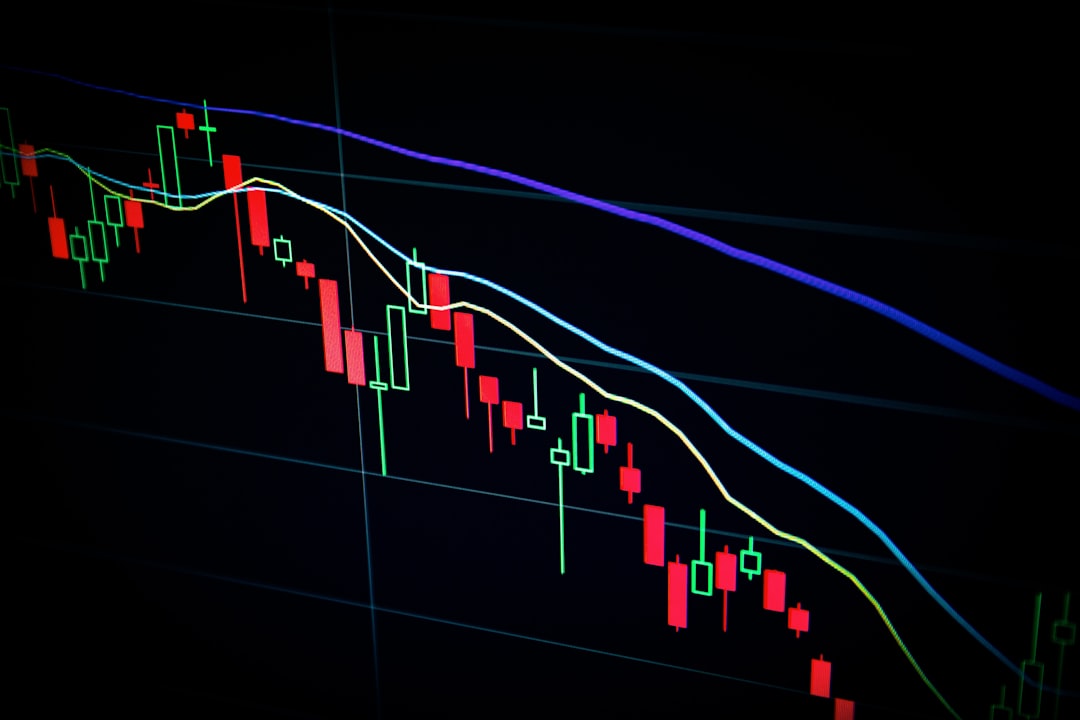
If you were relying on the pre-February 2026 consensus — that Brent would quietly drift down toward the mid-$50s — you’ve had to throw that playbook out the window. In March 2026, following the US-Israeli Iranian war and the “complete control” of the Strait of Hormuz by Iran, oil prices skyrocketed by more than 30% in less than a month, ending up at $102/bbl on March 16th.
The EIA’s April 2026 Short-Term Energy Outlook paints a vivid picture of just how dramatic the supply-side shock has been. Iraq, Saudi Arabia, Kuwait, UAE, Qatar, and Bahrain collectively shut in 7.5 million barrels per day (b/d) of crude oil production in March, with production shut-ins assessed to rise to 9.1 million b/d in April. That’s not a blip — that’s a structural fracture in global supply logistics.
The Brent crude oil spot price averaged $103 per barrel in March, and the EIA expects it to peak in Q2 2026 at $115/b before easing as production shut-ins slowly abate. A risk premium on crude oil prices is maintained throughout the forecast period, as uncertainty around future supply disruptions is expected to keep prices above pre-conflict levels.
Meanwhile, crude oil rose to $105.46 USD/Bbl on April 12, 2026, up 9.20% from the previous day. Real-time market action confirms the premium isn’t going away quietly.
📊 The Great Forecast Divergence: Bears vs. Reality in 2026
Here’s where it gets fascinating from an analyst’s perspective: the spread between pre-conflict institutional forecasts and post-conflict reality is enormous. Let’s compare:
- J.P. Morgan (pre-conflict base case): J.P. Morgan Global Research expected to see Brent crude averaging around $60/bbl in 2026, with this bearish forecast underpinned by soft supply-demand fundamentals pointing to lower oil prices in the coming months.
- EIA April 2026 (post-conflict): Brent crude oil prices are now expected to increase from an average of $81/b in Q1 2026 to a peak of $115/b in Q2 2026 before gradually falling to an average of $88/b in Q4 2026.
- World Bank (structural view): Energy prices were expected to fall by 10 percent in 2026 year-over-year, following a projected 12 percent decline in 2025. That forecast has been dramatically overtaken by events.
- Dallas Fed Energy Survey (industry voices): On average, respondents expect a West Texas Intermediate (WTI) oil price of $74 per barrel at year-end 2026, with responses ranging from $50 to $135 per barrel. That wide range tells you everything about current uncertainty.
- LiteFinance (bullish scenario): According to analysts, an escalation of the conflict could push prices up to $150–$200 during the year. A tail risk, but no longer unthinkable.
- Reuters Poll (consensus): Both crude oil benchmarks are now expected to average above $60 per barrel this year, with price forecasts higher by about $1.50 per barrel compared to a month ago. Despite ongoing concerns about an oversupplied market, the 34 analysts and economists surveyed by Reuters in February raised their projections in view of uncertainties around how the Iran crisis would unfold.
⛽ Natural Gas: A Market Splitting in Two
Natural gas in 2026 is arguably the most regionally bifurcated commodity on earth right now. The reduction in flows of liquefied natural gas (LNG) exports through the Strait of Hormuz has reduced global LNG supply and sharply increased the spread between the U.S. benchmark Henry Hub spot price and European and Asian import prices.
On the U.S. side, the picture is surprisingly well-supplied. Natural gas inventories ended the 2025–2026 withdrawal season (November–March) 3% above the five-year average, at just over 1,900 billion cubic feet (Bcf). Survey participants from the Dallas Fed foresee a Henry Hub natural gas price of $3.60 per million British thermal units (MMBtu) at year-end 2026.
But in Europe, the story is completely different. In March 2026, after the start of the US-Israel Iran war, TTF prices went up rapidly. In response to strikes, Qatar stopped its LNG production and the Strait of Hormuz came under Iranian control. Enverus projects Henry Hub to average about $3.80/MMBtu in winter and $3.60/MMBtu next summer, while TTF stays near $10–$12/MMBtu amid steady global LNG demand and renewable balancing needs.
🌍 The Geopolitical Risk Premium: How to Think About It
From a risk management standpoint, the geopolitical risk premium is the single most important variable to track right now — and arguably the hardest to model. The geopolitical risk premium already baked into the price of oil is about $4–$10 per barrel, according to analysts. The ultimate impact on oil and gas markets and the broader economy from the conflict will depend not only on the intensity of military attacks and any damage to energy assets, but also, crucially, on the duration of disruptions to shipping through the Strait of Hormuz.
The IEA has taken emergency action: IEA Member countries unanimously agreed on March 11 to make 400 mb of oil from their emergency reserves available to the market to address disruptions stemming from the war in the Middle East. Global observed inventories of crude and products are currently assessed at more than 8.2 billion barrels, the highest level since February 2021. That buffer exists, but it has limits.

🔋 The Structural Counter-Trend: Renewables & Power Demand
Amid the chaos, it’s easy to miss the structural energy transition story that continues to unfold beneath the surface. The rapid expansion of the U.S. data center fleet will lead to a 7.7GW jump in average power demand from the sector in 2026. The global LNG market is headed for a glut in supply, with new production capacity slated to commission from the U.S., Qatar, Australia, Mexico, and Africa in 2026.
On the carbon side, EU carbon prices are forecast at €87 per ton in 2026, as European Union carbon prices rise due to allowance supply tightening sharply. This ongoing carbon cost pressure is pushing European industrial energy buyers toward longer-term hedging strategies and accelerated renewable procurement — a trend that’s only intensifying as fossil fuel prices gyrate.
🧠 Key Data Points to Track in 2026
- Strait of Hormuz status: Approximately 20% of global oil demand typically transits through the Strait of Hormuz — monitor daily shipping reports obsessively.
- EIA Weekly Inventory Reports: U.S. crude stock builds or draws are the fastest real-time signal of demand erosion or recovery.
- Henry Hub vs. TTF spread: Henry Hub is expected near $3.60–$3.80/MMBtu while TTF holds near $10–$12/MMBtu — this spread is a live geopolitical thermometer.
- OPEC+ meeting decisions: OPEC+’s planned 206,000 barrels per day output increase from April 2026 and a potential Hormuz normalization remain the key downside risks to current price levels.
- U.S.-Iran negotiation signals: Cautious optimism that the war in the Middle East could be nearing an end has emerged, with US and Iranian delegations set to meet, while Israel has agreed to hold talks with Lebanon’s government, raising hopes for de-escalation.
- IEA demand revisions: The IEA reduced the forecast for global oil demand growth in March and April by more than 1 mb/d on average — and for 2026 as a whole by 210 kb/d to 640 kb/d.
💡 Realistic Strategies for Navigating This Market
If you’re asking “should I just stay out entirely?” — that’s an understandable instinct, but not the most productive one. Here’s the more nuanced framing:
For energy investors and traders: Don’t fight the geopolitical risk premium in the near term — disruptions are expected to continue through late 2026, putting upward pressure on prices, with escalating attacks on energy infrastructure and uncertainty about the duration of the conflict leading analysts to assess that oil prices will reflect a larger risk premium throughout the forecast. But also don’t forget the mean-reversion case: the EIA forecasts Brent crude oil prices will fall below $90/b in Q4 2026 and average $76/b in 2027.
For corporate energy buyers: This is actually a textbook environment for layered hedging — locking in portions of your H2 2026 needs at current elevated levels while maintaining exposure to the downside scenario if a peace deal materializes. Don’t go all-in directional either way.
For long-term portfolio positioning: “2026 is a year of recalibration as capital focuses on specific winners like gas-fired generation and landfill RNG, grid operators tightening AI-driven load forecasts, and data centers move toward behind-the-meter generation,” noted Ian Nieboer, managing director of Enverus Intelligence Research. In other words, the structural energy transition story hasn’t stopped — it’s just gotten louder volatility layered on top.
Editor’s Comment : If 2026 has taught us anything by April, it’s that energy commodity markets have fully re-entered an era where geopolitics overwhelms fundamentals — at least in the short term. The forecasting divergence between pre-conflict institutional models ($55–$65/bbl Brent) and the real-world $100+ spike is a humbling reminder that risk management matters more than price prediction accuracy. My honest take? Build your scenarios around a range of outcomes: a de-escalation path where Brent gradually retreats toward $80–$90 by year-end, and a protracted conflict path where $115–$130 becomes the new normal. Both are live scenarios as of today. The traders and energy managers who survive this year will be the ones who refused to be caught all-in on either extreme.
📚 관련된 다른 글도 읽어 보세요
- 2026 글로벌 원자재 투자 전략 최신 트렌드 — 지금 어디에 베팅해야 할까?
- 2026 인플레이션 추이 완전 분석 | 소비자물가 지금 어디쯤 왔을까?
- Strong Dollar, Weak Dollar: How Currency Swings Are Crushing (and Creating) Commodity Opportunities in 2026
태그: energy commodity prices 2026, crude oil price forecast 2026, Brent crude outlook, natural gas price 2026, Strait of Hormuz oil market, geopolitical risk premium oil, LNG price forecast 2026
Leave a Reply