Picture this: It’s early 2026, and you’re standing in a grocery store noticing that the price tags on your usual items haven’t jumped dramatically compared to last year. There’s a quiet sense of relief — but also a strange hesitation at the checkout. You still reach for the store-brand pasta instead of the premium one. Old habits, right? This micro-moment is playing out in millions of households worldwide, and it’s telling us something profound about the post-inflation consumer psyche that pure economic data simply can’t capture.
Yes, inflation is slowing down in 2026. But that doesn’t mean consumers are rushing back to their pre-inflation spending habits. Let’s think through this together — because the story is far more nuanced, and frankly, more fascinating than the headlines suggest.
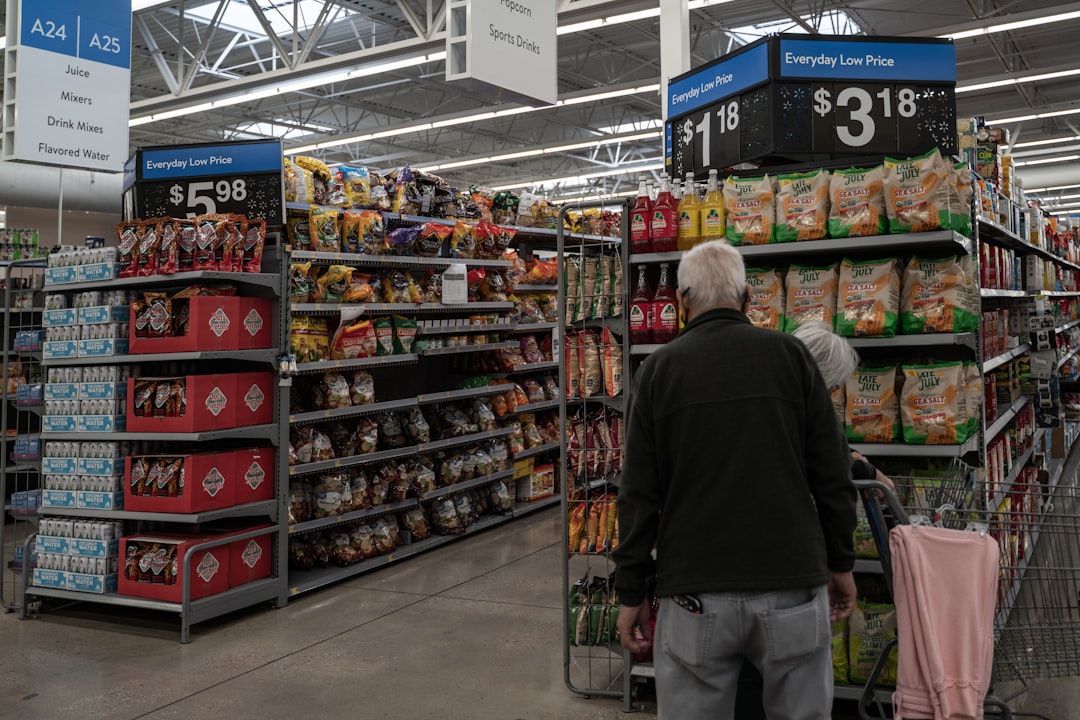
📊 The Numbers: What “Cooling Inflation” Actually Looks Like in 2026
To set the stage, let’s look at where we actually stand. In the United States, the Consumer Price Index (CPI) growth rate has decelerated to approximately 2.4% year-over-year as of Q1 2026 — meaningfully closer to the Federal Reserve’s 2% target than the painful peaks of 8–9% we saw back in 2022. The Eurozone is seeing similar normalization, with headline inflation hovering around 2.1–2.6% across major economies. South Korea’s Statistics Korea reported a CPI increase of roughly 2.3% year-on-year in early 2026, a dramatic contrast from the 5–6% surges experienced in 2022–2023.
On paper, this sounds like the storm has passed. But here’s where it gets interesting: price levels haven’t fallen — they’ve just stopped rising as fast. That distinction is enormous for real household budgets. A family that was spending $800/month on groceries in 2020 might now be spending $1,100–$1,200, even with “cooling” inflation. The cumulative price damage is still very much baked in.
- Core services inflation (rent, healthcare, education) remains stickier than goods inflation in most developed markets.
- Wage growth in the U.S. is running at approximately 3.8% year-over-year in early 2026 — technically outpacing inflation, but not enough to erase 3 years of accumulated price increases for many workers.
- Consumer confidence indices (e.g., Conference Board, University of Michigan) show cautious optimism but not euphoria — people feel slightly better, not fundamentally healed.
- Personal savings rates in the U.S. remain relatively low at around 3.5–4%, suggesting consumers are still stretched despite slowing inflation.
- Credit card delinquency rates have ticked up compared to 2023 levels, particularly in the 25–40 age bracket, pointing to ongoing financial stress beneath the surface.
🛒 The “Inflation Scar” Effect: Why Consumers Aren’t Bouncing Back Immediately
Behavioral economists have a term worth knowing here: loss aversion. Research consistently shows that people feel the pain of a financial loss roughly twice as intensely as the pleasure of an equivalent gain. When consumers endured 2–3 years of price shocks, it didn’t just drain wallets — it rewired spending psychology. In 2026, even as price pressures ease, many shoppers have internalized frugality as a new identity, not just a temporary survival strategy.
A fascinating data point: McKinsey’s 2026 Global Consumer Sentiment Report found that approximately 62% of surveyed consumers across 15 markets said they planned to continue trading down to lower-cost alternatives in at least one major spending category, even though they acknowledged that their financial situation had improved slightly. This is what I call the “inflation scar” — and it’s reshaping entire consumer markets.
🌍 International Examples: How Different Markets Are Responding
United States — The Bifurcated Consumer Economy: The U.S. is experiencing what analysts are calling a “K-shaped recovery” in consumer spending. High-income households (top 20% by income) are spending robustly on travel, luxury goods, and experiences — the premium segment of the leisure and hospitality market is actually booming. Meanwhile, middle- and lower-income households remain deeply value-conscious, driving record-level growth for discount retailers like Walmart, Aldi, and Dollar General even into 2026. This bifurcation is one of the defining commercial stories of the year.
South Korea — The “Resale Economy” Surge: South Korean consumers, particularly Gen Z and younger Millennials, have dramatically accelerated adoption of second-hand and resale platforms like Karrot (당근마켓) and Bunjang (번개장터). These platforms reported combined GMV (Gross Merchandise Value) increases of over 30% year-on-year in 2025, a trend that has carried strongly into early 2026. Korean consumers have become exceptionally adept at finding value without sacrificing lifestyle quality — a behavioral shift that major Korean retailers like Lotte and Shinsegae are scrambling to adapt to.
Germany & the EU — Experiences Over Things: Germany, which went through a particularly acute energy-price crisis in 2022–2023, is showing a strong consumer pivot toward spending on experiences — domestic travel, cultural events, dining — rather than durable goods. German retail sales data for goods remain sluggish even in 2026, while the hospitality and tourism sectors show clear recovery momentum. This aligns with a broader European trend of “conscious consumption” that prioritizes meaning over material accumulation.

🏪 How Industries Are Adapting — and Which Ones Are Winning
The consumer market isn’t passively waiting for old spending patterns to return. Smart companies have been actively engineering for the post-inflation consumer, and the strategies are worth studying:
- Private label dominance: Supermarkets globally have aggressively expanded store-brand product lines. In the UK, retailer Tesco now derives over 55% of grocery revenue from own-brand products as of 2026 — a historic milestone. Consumers who switched to store brands during peak inflation have largely stayed, even as name-brands launched counter-campaigns.
- Subscription model fatigue and restructuring: The pandemic-era subscription boom is being followed by a rationalization phase. Many consumers are canceling or pausing non-essential subscriptions — streaming services, meal kits, beauty boxes — creating openings for “pay-per-use” or “flexible plan” models that reduce commitment anxiety.
- The “affordable luxury” middle market: Brands positioned just above mass-market but clearly below true luxury are seeing outsized growth. Think accessible athleisure, mid-tier specialty coffee brands, and quality-forward skincare at non-luxury price points. Consumers want to feel they’re treating themselves without true luxury price tags.
- AI-powered personalized discounting: Retailers like Amazon, Target, and emerging Asian e-commerce platforms are deploying AI to offer hyper-personalized discount and loyalty offers. Rather than broad markdowns, they’re targeting individual price-sensitivity thresholds — a major leap from traditional coupon marketing.
- Health & wellness resilience: Despite tighter budgets, spending on health, fitness, and mental wellness has remained notably resilient across demographics in 2026. Consumers appear to view health spending as non-negotiable, even when cutting back elsewhere — a significant shift from pre-pandemic attitudes.
🔮 What This Means for Everyday Consumers: Realistic Alternatives Going Forward
Okay, so where does this leave you as an individual navigating this environment? Let me offer some practical, grounded perspectives rather than generic financial advice:
If you’re feeling like your budget still feels tight even though inflation is “officially” cooling, you’re not imagining it — and you’re not failing at personal finance. You’re experiencing the cumulative weight of multi-year price increases that haven’t reversed. The productive move isn’t guilt; it’s strategic adaptation.
- Audit your subscriptions with fresh eyes every quarter. The average U.S. household still underestimates its monthly subscription spending by about $133, according to recent 2026 survey data. A quarterly review can recover real money.
- Lean into the resale and circular economy. Platforms like Poshmark, Vinted, eBay, and local equivalents aren’t just for bargain hunters anymore — they’re smart, mainstream choices used by millions of financially savvy consumers.
- Reframe “trading down” as “trading smart.” Choosing a store-brand product or a less-known alternative that performs equivalently isn’t a compromise of your lifestyle — it’s intelligent resource allocation that frees budget for things that genuinely matter to you.
- Prioritize experiences that build memories over goods that depreciate. The data on happiness economics is consistent: experiences generate more lasting satisfaction than equivalent-cost material purchases. This aligns beautifully with where consumer culture seems to be naturally heading in 2026.
- Watch for “shrinkflation reversals.” Some brands that secretly shrank package sizes during peak inflation are quietly restoring them to original sizes as competitive pressure mounts. It pays to notice and reward brands that treat you honestly.
The broader point? The 2026 consumer landscape is genuinely different from 2019 — and that’s not entirely a bad thing. The inflation shock, for all its hardship, accelerated some genuinely positive behavioral shifts: more value-consciousness, less thoughtless consumption, greater appreciation for experiences over things, and a boom in circular economy participation.
The smart move — whether you’re a consumer, a small business owner, or someone planning a major purchase — is to stop waiting for a return to pre-2022 “normal” and start designing your financial life around the reality of 2026. Because honestly? This is the new normal, and it has its own kind of opportunity baked right in.
Editor’s Comment : What strikes me most about this moment is how consumer behavior is running about 12–18 months behind the macroeconomic data. Inflation has technically cooled, but the psychological and behavioral patterns forged during those brutal price-surge years are still very much driving decisions in 2026. For anyone feeling that disconnect between the good economic headlines and their personal financial reality — trust your lived experience. The numbers are getting better, but healing consumer confidence is a slower, more human process than any central bank model fully captures. And that’s perfectly okay.
📚 관련된 다른 글도 읽어 보세요
- 중국 경제 성장률 2026 전망 – 둔화 속에서도 기회는 있다
- Commodity Futures Investing in 2026: Honest Pros, Cons & Smarter Alternatives You Should Know
- Commodity Futures Investing for Beginners in 2026: What You Really Need to Know Before You Start
태그: [‘inflation slowdown 2026’, ‘consumer spending trends 2026’, ‘post-inflation market changes’, ‘value consumer behavior’, ‘economic recovery 2026’, ‘lifestyle budgeting strategies’, ‘global retail trends 2026’]
Leave a Reply