Picture this: It’s early 2026, and headlines are screaming about slowing GDP growth across the G7, a cooling Chinese manufacturing sector, and central banks caught between stubborn inflation and rising unemployment. Sound familiar? If you’ve been watching the markets lately, you already know this isn’t hypothetical — it’s Tuesday. A colleague of mine who manages a mid-sized portfolio recently told me, “I feel like I’m trying to navigate a ship through fog with half a compass.” That’s exactly where commodity investing enters the conversation.
Raw material investing — gold, silver, oil, agricultural commodities, industrial metals — has historically acted as both a hedge and an opportunity during economic downturns. But not all commodities behave the same way in a recession, and blindly throwing money at “hard assets” can burn you just as fast as ignoring them. So let’s think through this together, logically and realistically.
Why Commodities Matter During a Global Recession
In a traditional recession, equities fall, consumer spending contracts, and credit tightens. But commodities exist in a different dimensional space of the market. Their prices are driven by supply-demand fundamentals, geopolitical events, and currency dynamics — not just corporate earnings reports. This is what makes them uniquely positioned during downturns.
Here’s what the 2026 data is telling us right now:
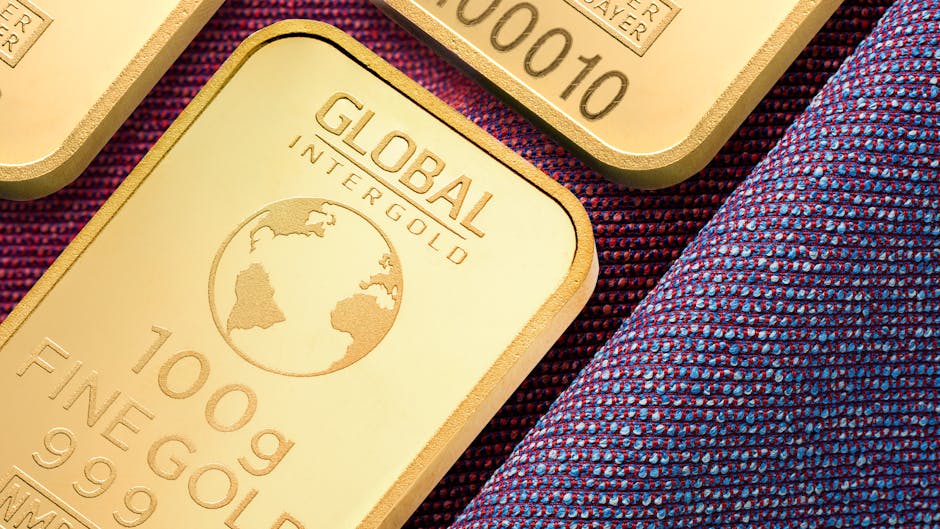
- Gold: Hovering near $3,100/oz as of Q1 2026, driven by central bank purchases (particularly from BRICS-aligned nations) and de-dollarization trends. The World Gold Council reported that central banks added over 1,000 tonnes for the third consecutive year.
- Crude Oil (WTI): Trading in a volatile $68–$82 range due to OPEC+ supply cuts being partially offset by weaker industrial demand from Europe and East Asia.
- Copper: Known as “Dr. Copper” for its predictive power on global economic health — currently under pressure at around $3.80/lb, signaling genuine demand contraction.
- Agricultural Commodities (Wheat, Corn): Elevated due to ongoing climate disruptions and the lingering fragmentation of Black Sea trade routes, keeping food inflation persistent.
- Silver: Benefiting from dual demand — both as a safe-haven asset AND as a critical industrial input for solar panels and EV batteries, making it a uniquely interesting play in 2026.
The Recession Playbook: Not All Commodities Are Created Equal
Let’s be honest about something most financial content glosses over: recessions are deflationary for some commodities and inflationary for others. Industrial metals like copper and aluminum tend to drop because factories slow down. Meanwhile, gold and silver often rise as investors flee to safety. Energy is complicated — demand drops, but geopolitical supply shocks can override that logic entirely.
Think of it as a Venn diagram. One circle is “recession pressure” (reduces commodity prices), and the other is “safe-haven demand” (increases them). Where those circles overlap is where you find the most nuanced investment decisions — and frankly, the most interesting ones.
Real-World Examples: How Countries and Investors Are Adapting in 2026
Let’s ground this in what’s actually happening globally right now:
South Korea’s National Pension Service (NPS) — one of the world’s largest sovereign wealth funds — quietly increased its allocation to commodity-linked ETFs and gold-backed instruments by approximately 4% in its 2026 rebalancing, citing “macroeconomic uncertainty and currency volatility” as key drivers. This is significant because NPS is famously conservative.
In the United States, retail investor interest in commodity ETFs like PDBC (Invesco Optimum Yield Diversified Commodity Strategy) and IAU (iShares Gold Trust) surged by double digits in Q1 2026 according to Morningstar flow data. This reflects a grassroots shift in how everyday investors are thinking about portfolio protection.
Brazil, the world’s largest soybean and iron ore exporter, has actually seen its currency (the Real) strengthen relative to the USD in early 2026 — a counterintuitive outcome driven by commodity export revenue providing a natural hedge against global risk-off sentiment. This is a textbook example of how commodity-producing economies behave differently during global slowdowns.
Japan and Germany, both heavily import-dependent for energy, are experiencing the flip side: their manufacturing sectors are being squeezed by commodity price volatility, which is dragging their Q1 2026 PMI readings below the critical 50-point expansion/contraction threshold.
Practical Strategies: How to Actually Position Yourself
Here’s where we shift from analysis to action. Your strategy should depend on your risk tolerance, investment horizon, and whether you’re working with a large institutional portfolio or your personal savings. Let’s cover both ends:
- For conservative investors: Gold (physical, ETFs, or gold-backed savings accounts) remains the most time-tested recession hedge. Consider allocating 5–15% of your portfolio. Platforms like Sprott Physical Gold Trust offer direct gold exposure without storage headaches.
- For moderate-risk investors: Diversified commodity ETFs (like DJP or PDBC) spread your exposure across energy, metals, and agriculture. This smooths out the volatility of any single commodity while giving you broad raw material exposure.
- For higher-risk, forward-looking investors: Silver and lithium-linked assets offer a compelling dual narrative — safe-haven demand PLUS green energy industrial demand. This convergence is particularly strong in 2026 as the energy transition continues despite economic headwinds.
- For those outside the US: Check whether your local brokerage offers commodity-linked structured products or currency-hedged commodity ETFs. Korean investors, for example, can access KODEX Gold Futures ETF (H) for won-hedged gold exposure.
- What to avoid: Leveraged commodity ETFs during high-volatility periods — their daily rebalancing creates a decay effect that can erode value even if you get the directional call right. These are tools for short-term traders, not recession hedgers.
The Risks Nobody Wants to Talk About
Look, I’d be doing you a disservice if I painted commodities as a magical recession shield. There are real risks here that deserve honest discussion:
First, demand destruction is real. If the 2026 global slowdown deepens into a full-scale deflationary spiral (think 2008-style credit crunch), even gold initially sold off as investors raised cash. The early weeks of such an event can be brutal across the board.
Second, storage and carry costs for physical commodities are real expenses that eat into returns over time — particularly for energy and agricultural products.
Third, geopolitical surprises cut both ways. A sudden peace agreement in a conflict zone could cause oil to drop sharply; a new trade deal could crater agricultural futures. Commodities are inherently event-driven, which means the unexpected is always priced in — until it isn’t.
Realistic Alternatives If Commodity Investing Feels Too Complex
Not everyone is in a position to actively manage commodity exposure, and that’s completely valid. Here are some simpler alternatives that still provide meaningful recession protection:
- Commodity-linked stocks: Investing in mining companies (Barrick Gold, Rio Tinto) or energy majors (ExxonMobil, TotalEnergies) gives you indirect commodity exposure with the added benefit of dividends and easier trading through a standard brokerage account.
- Inflation-protected bonds (TIPS in the US, or equivalents in your country): These don’t track commodity prices directly but provide protection against the inflation that often accompanies commodity price spikes.
- Multi-asset “all weather” funds: Inspired by Ray Dalio’s All Weather Portfolio concept, these funds automatically balance between stocks, bonds, gold, and commodities based on economic conditions — great for set-it-and-forget-it investors.
- High-yield savings or money market funds: If you’re genuinely uncertain and prioritize capital preservation above all, keeping a larger cash buffer in high-yield accounts (currently offering 4–5% APY in the US) is a perfectly reasonable recession response.
The key takeaway? There is no single “right” answer — there’s only the right answer for your specific financial situation, timeline, and stomach for volatility. A 30-year-old with a stable income should approach this very differently from someone approaching retirement. That nuance is everything.
Editor’s Comment : Commodity investing in 2026 isn’t about chasing the hottest asset class — it’s about understanding that economic uncertainty creates both risk and genuine opportunity in the raw materials space. The investors who navigate recessions best aren’t the ones who panicked or the ones who ignored the signals, but the ones who stayed curious, stayed diversified, and made deliberate choices based on their own circumstances. Whether you go all-in on gold, dip a toe into diversified ETFs, or simply shift toward commodity-linked equities, the most important move is having a strategy rather than a reaction. Keep asking questions, keep pressure-testing your assumptions, and remember: the best portfolio is the one you can actually stick to when things get turbulent.
📚 관련된 다른 글도 읽어 보세요
- How Central Bank Monetary Policy Really Moves Stock Markets in 2026: What Every Investor Needs to Know
- Dollar Surge in 2026: How Emerging Market Economies Are Absorbing the Shock — And What You Can Do About It
- 원자재 선물 투자 초보자 가이드 2026 — 처음 시작하기 전에 반드시 알아야 할 것들
태그: [‘commodity investing 2026’, ‘global recession hedge’, ‘raw material investment strategy’, ‘gold silver recession’, ‘commodity ETF portfolio’, ‘economic downturn investing’, ‘inflation hedge assets’]
Leave a Reply